|
1
|
|
|
2
|
- How the Power of Images
meets
- The Power of Computation
and results in the need for
- Visual Digital Literacy
|
|
3
|
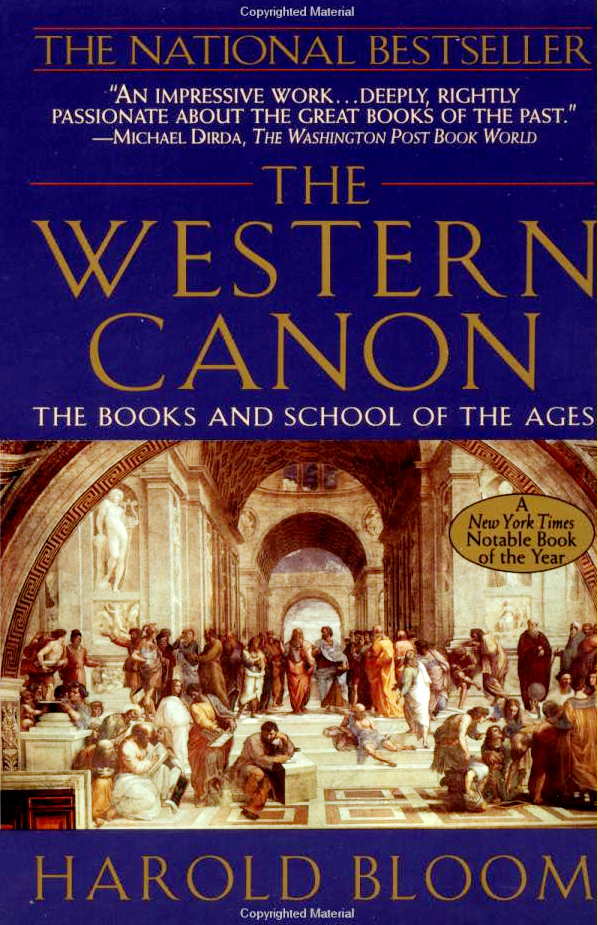
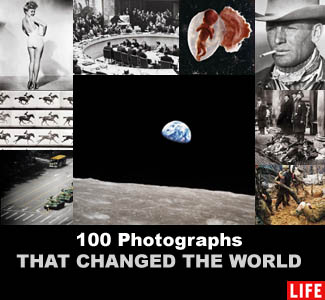
- Image canon
- Image explosion
- Suspicion of the visual
- Continuous/dense vs. discrete forms of communication
- Computer graphics as a tipping factor for visual literacy
- Visual Digital Literacy
|
|
4
|
|
|
5
|
- Image canon
- Image explosion
- Suspicion of the visual
- Continuous/dense vs. discrete forms of communication
- Computer graphics as a tipping factor for visual literacy
- Visual Digital Literacy
|
|
6
|
- For most our history, books were one of few leisure-time activities
- Pictures used to be rare—had to be in special locations devoted to art
(e.g., caves, then tombs, temples, churches, etc.)
- Photography is not even 200 years old
- 1895: first public viewing of a motion picture (Lumiere Brothers, Paris)
– 50 years later half the population of the US went to a movie at least once a week
- 1946—commercial TV.
- By HS graduation more TV than hours in school (AACAP)
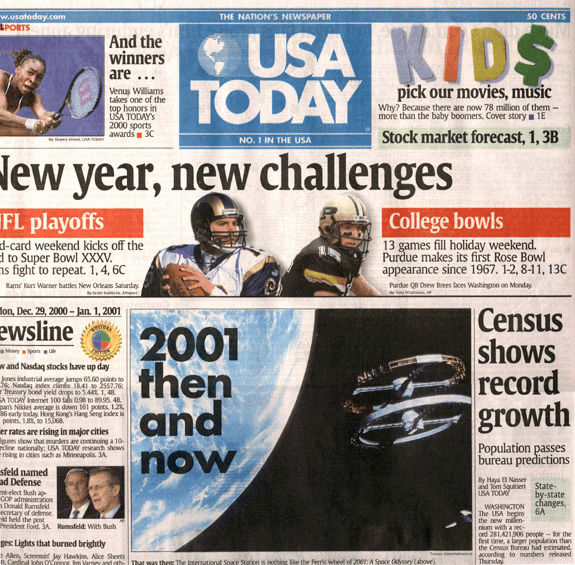
- Early 1980s—USA Today and other highly graphical newspapers
- 1970s: public begins to see images made with computers
- 1990s: images on Internet—WWW
|
|
7
|
|
|
8
|
- Image canon
- Image explosion
- Suspicion of the visual
- Continuous/dense vs. discrete forms of communication
- Computer graphics as a tipping factor for visual literacy
- Visual Digital Literacy
|
|
9
|
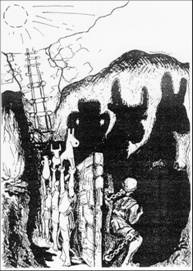
- “Behold! human beings living in a underground den, which has a mouth
open towards the light and reaching all along the den; here they have
been from their childhood, and have their legs and necks chained so that
they cannot move, and can only see before them, being prevented by the
chains from turning round their heads. Above and behind them a fire is
blazing at a distance, and between the fire and the prisoners there is a
raised way; and you will see, if you look, a low wall built along the
way, like the screen which marionette players have in front of them,
over which they show the puppets.”
- This entire allegory, I said, you may now append, dear Glaucon, to the
previous argument; the prison-house is the world of sight, the light of
the fire is the sun, and you will not misapprehend me if you interpret
the journey upwards to be the ascent of the soul into the intellectual
world according to my poor belief, which, at your desire, I have
expressed whether rightly or wrongly God knows. But, whether true or
false, my opinion is that in the world of knowledge the idea of good
appears last of all, and is seen only with an effort; and, when seen, is
also inferred to be the universal author of all things beautiful and
right, parent of light and of the lord of light in this visible world,
and the immediate source of reason and truth in the intellectual; and
that this is the power upon which he who would act rationally, either in
public or private life must have his eye fixed. Plato’s Republic 360BC
- 19th c French thinkers: Saussure, Derrida, and others
(discussed later)
|
|
10
|
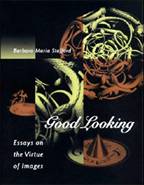
- “The passionate visualist, roaming the labyrinth of the postdisciplinary
age, is haunted by the paradoxical ubiquity and degradation of images:
everywhere transmitted, universally viewed, but as a category generally
despised.” p11 [Stafford1996]
- Call to lead images out of Plato’s “ill-lit and second-class hotel for
ghostly transients.”p40 [Stafford1996]
|
|
11
|
- Ever read a positive article about TV watching?
- Or a negative one about doing any type of reading or math?
- Which do people think smarter: math grad or art student?
- Under suspicion in academia, e.g., although Greeks relied on geometry,
visuals shut out of math until recently (Phil Davis lecture)
|
|
12
|
- Plato: “’This invention will produce forgetfulness in the souls of those
who have learned it… They will not need to exercise their memories,
being to reply on what is written,’ and since written words come without
‘benefit of a teacher’s instruction’ they will produce only ‘a
semblance’ of ‘;wisdom,’ not ‘truth,’ not ‘real judgment.’”
[Plato’s Socrates tells the story of the God Thoth offering
writing to the Egyptian King Thamus. The Rise of the Image/The Fall of
the Word p 23]
|
|
13
|
- Archdeacon Frollo in Victor Hugo’s The Hunchback of Notre Dame (1831):
“This will destroy That. The Book will destroy the Edifice.”
- Alexander Pope: printing press unleashed a “deluge of authors” most of
which were not fit to read. Also expressed fear of people with false
experience gained through reading rather than real life…
- Henry David Thoreau on telegraph lines: “ Maine an d Texas… have nothing
important to communicate.”
- In 1877 NYT on Bell’s telephone: “horrible invasion of privacy.”
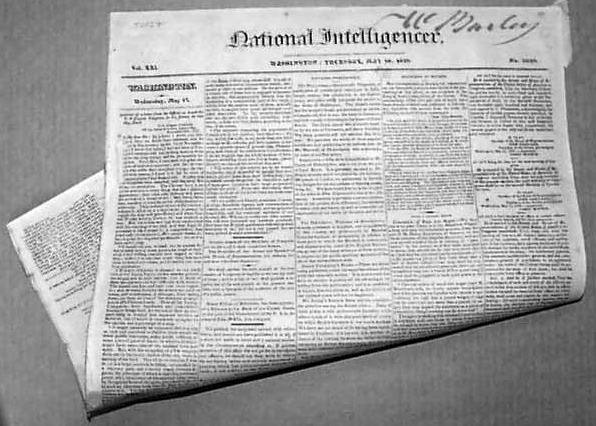
- Photographs in newspapers called “infantile”
- Early 20th century: pencils with erasers banned in some
schools. “The easier errors maybe corrected, the more errors will be
made.” (An argument also used against students’ use of word processing
in the 1980s.)
|
|
14
|
|
|
15
|
|
|
16
|
|
|
17
|
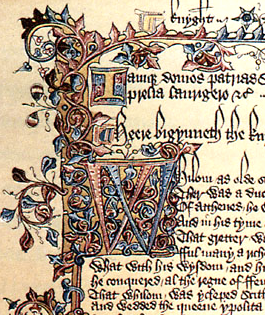
- In the past: images and text made in same way, by hand (e.g., Medieval
manuscripts)
- Changed in 1450s with Gutenberg’s printing press
- Why no similar technology for images? Text already an abstract, discrete
method of encoding meaning (paperback has same content as original
manuscript)
- In general, no way to abstractly encode images until computer graphics.
Print of a painting not equivalent in content to original…
- Now have abstract (text- and numbers-based) representation of
images—images produced are different views of that same data
|
|
18
|
- Gladwell’s Tipping Point
- Understanding rapid change, e.g., epidemics
- Why did crime drop so dramatically in New York City in the mid-1990's?
- Why is word-of-mouth so powerful? E.g., viral marketing
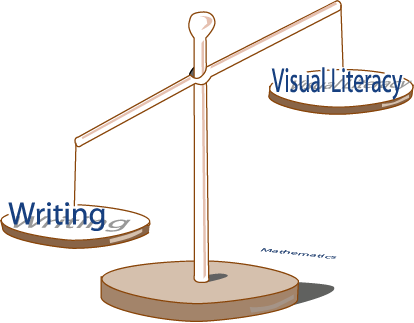
- Printing press à textual
literacy
- Computer graphics and networks à visual literacy
|
|
19
|
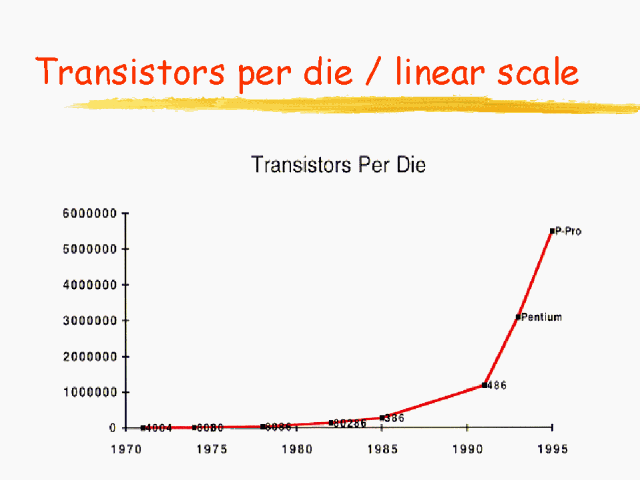
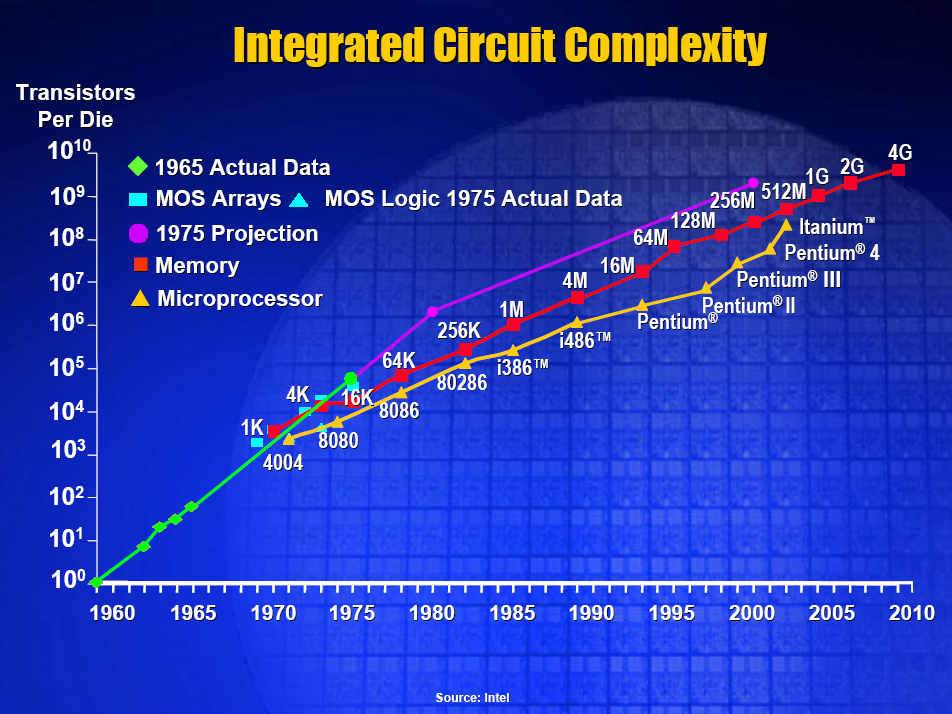
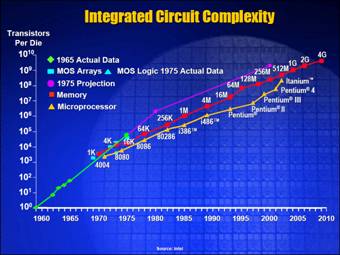
- Moore’s “Law”
- Ubiquity of visual software
- Web/Internet for distribution/communication
- Now amateurs can play
- Output from instrumentation (e.g, Hubble)
- Computation of everything (new way of looking at world)
- Globalization
|
|
20
|
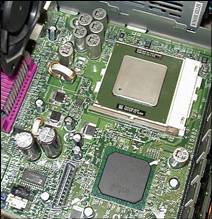
- Actually a prediction that the number of transistors doubles every 18
months
- Or… price/performance improves x 2 every 18 months)
|
|
21
|
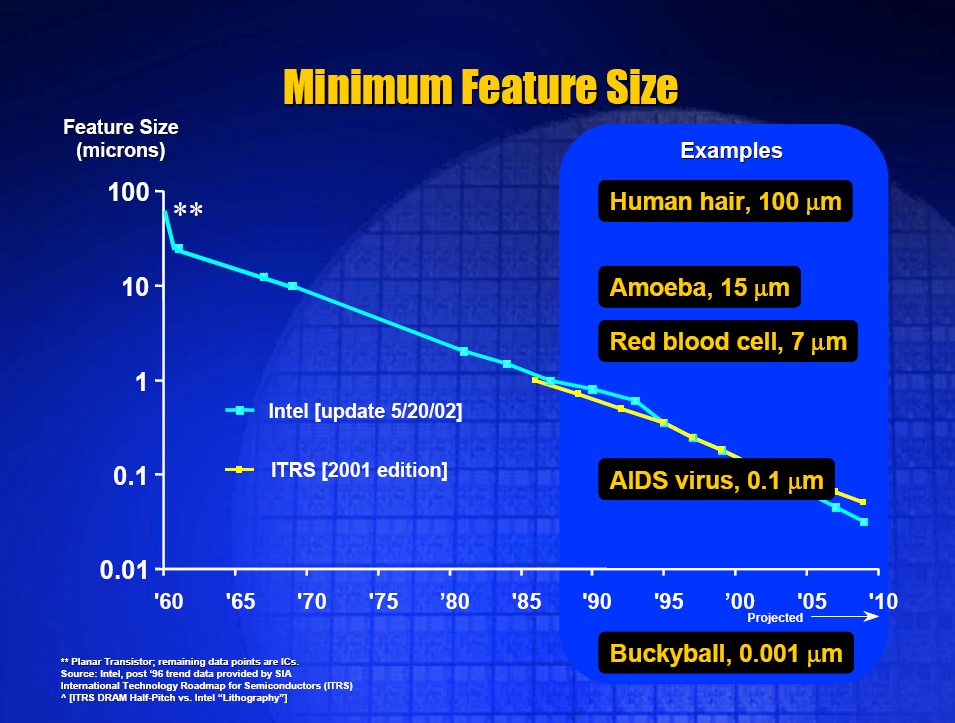
- 10-9 meters see http://www.wordwizz.com/10exp-9.htm
- The distance your fingernails grow in one second
- One hundred million times smaller than a large potato
- If you stretched a rubber band appr. one yard in length from Los Angeles
to New York, then one nanometer would have been stretched to 0.16
inches.
- http://www.cientifica.com/archives/000048.html
|
|
22
|
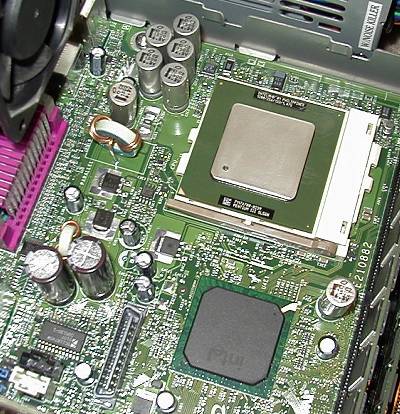
- Graphics chips doubling price/performance every 6-9 months!
- Already more complex than microprocessor chips.
- People thinking of using them to substitute for microprocessor
chips—because graphics so compute-intensive
- Graphics processor never idle whereas microprocessor often idle.
|
|
23
|
|
|
24
|
- If, over the past 30 years, transportation technology had improved at
the same rate as information technology with respect to size, cost,
performance, and energy efficiency, then an automobile would ...
- be the size of a toaster
- cost $200
- go 100,000 miles per hour
- travel 150,000 miles on a gallon of fuel
- And would blow up two or three times a day killing all the occupants…
|

 Notes
Notes