|
1
|
|
|
2
|
- 3D is much, much more complex and powerful than 2D
- Very brief history
- Basic concepts in 3D modeling and rendering
- Enough to be comfortable learning and using packages
- Highly technological and developed field of CG
- Video games, FX, are the drivers (more $$ than film)
- Visualization
- CAD/CAM, architecture
- Photorealism (imitating nature) was the original quest, now joined by
NPR: cartoon physics, illustrative art and rendering
- What is a model? What is an image? How do we map from one to the other?
- CS15/16 or CS17/18 à CS123,
CS224
|
|
3
|
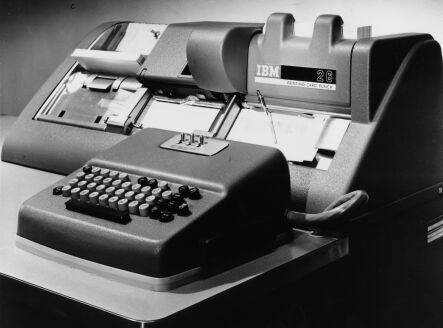
- Before Sutherland’s 1963 Sketchpad, alphanumeric output via
plotters/printers, input via
- keypunch, both in batch; some hacked “graphics” made with characters
:>)
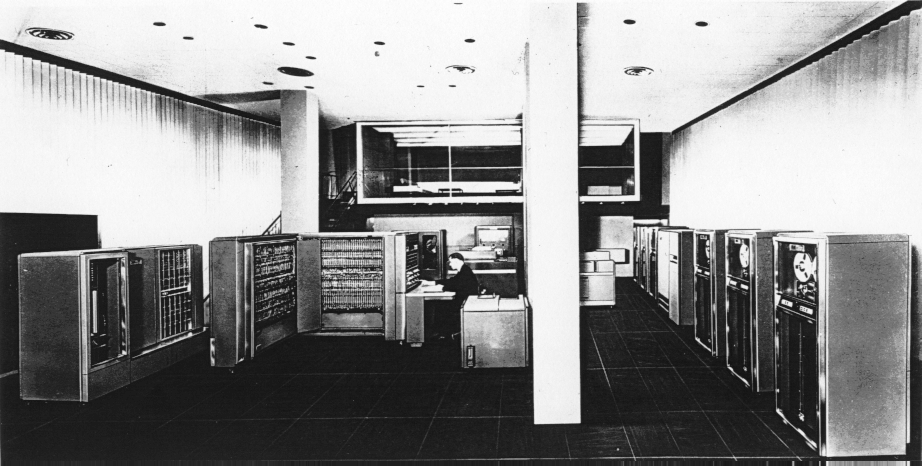
- Batch Computing (1950s – now)
|
|
4
|
- Almost all the key elements of interactive graphics system are expressed
in the first paragraph of Sutherland’s 1963 Ph.D. thesis, entitled, Sketchpad,
A Man-Machine Graphical Communication System:
- Today, still use batch mode for final production-quality video and film
(special effects – fx), where one frame of a 24 fps movie may take 8-24
hours to render on the fastest PC!
|
|
5
|
- Graphics has been a key enabling technology in the evolution of
computing environments:
- graphical user interfaces
- visual computing, e.g., desktop publishing of text and illustrations,
scientific visualization, information visualization
- Hardware revolution drives everything
- every 12-18 months, computer power improves by factor of 2 in price /
performance – Moore’s “Law”
- Wrist watches, cell phones, BlackBerry™, Treo™
- 3Com Palm™ organizers, Compaq I-Paq™ as a full PC
- Hallmark singing card, LeapFrog™ Pad
- graphics memory and network speeds are on even faster exponentials
- Graphics chips improve dramatically every six to nine months (e.g.
nVidia GeForce™ series, ATI
Radeon™ series) due to huge competition between vendors
|
|
6
|
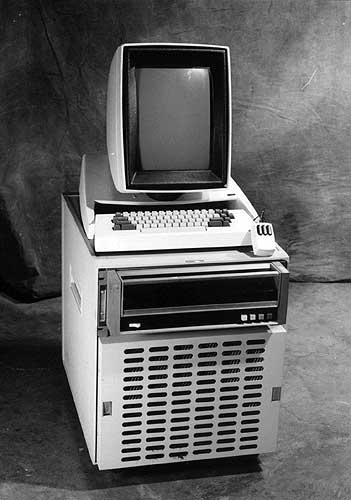
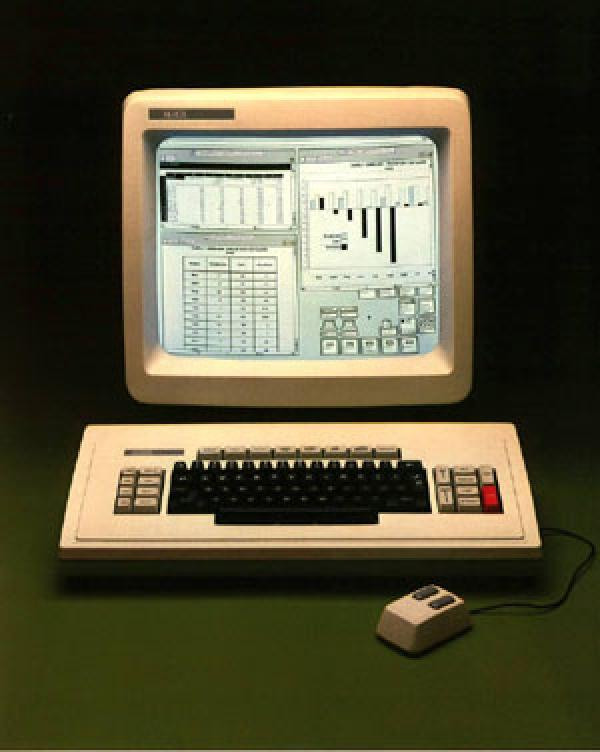
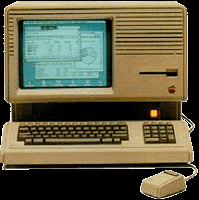
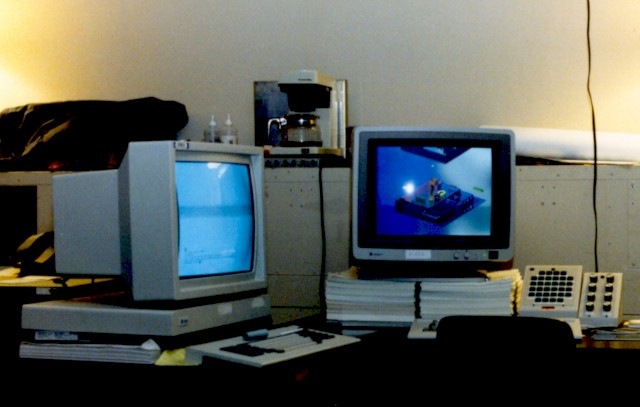
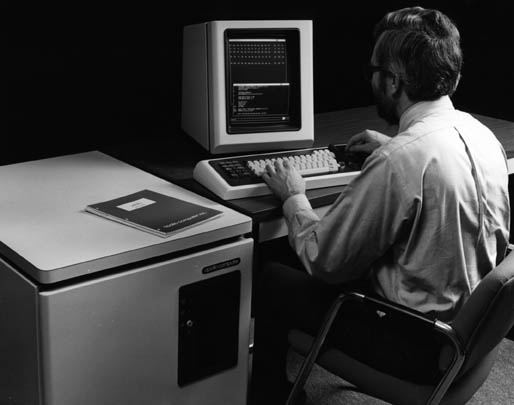
- Character Displays (1960s – now); bitmap raster graphics workstations
and PCs from 1972 - now
|
|
7
|
|
|
8
|
- Primitive shapes (primitives) are manipulated with geometric
transformations (translation, rotation, scale). These transformations
are essential for model composition, the process of hierarchically
composing complex objects from simpler components.
- Hierarchical models and the same geometric transformations are also
essential for animation.
- Once object’s geometry is established, must be viewed on a screen. Must
specify the “camera’s” PoV and map from 3D to 2D for viewing (and from
2D to 3D for 2D input devices (e.g., the mouse or pen/stylus)).
- In the process of mapping from 3D to 2D, object (surface) material
properties and lighting effects are used in rendering one’s
constructions. The rendering process is also called image synthesis.
|
|
9
|
- Divide and Conquer
- Hierarchy of geometrical components
- Reduction to primitives (e.g., spheres, cubes, etc.)
- Simple vs. not-so-simple elements (nail vs. screw)
|
|
10
|
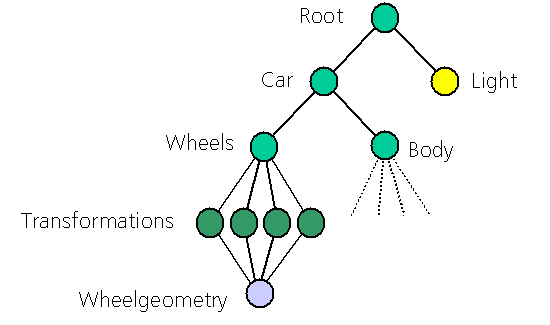
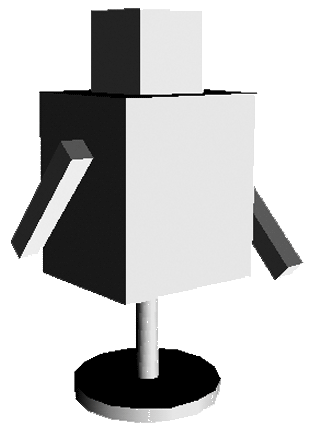
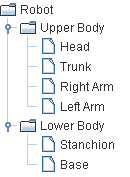
- The object to be modeled is (visually) analyzed, and then decomposed
into collections of primitive shapes.
- The tree diagram provides a visual method of expressing the “composed
of” relationships of the model.
- Such diagrams are part of 3D program interfaces (e.g., 3D Studio MAX,
Maya).
- Scenegraph: an internal representation of a geometric model, to be
rendered
|
|
11
|
- The primitives created in the decomposition process must be assembled to
create the final object. This is
done with transformations,
- T, R, S (as in the example above).
|
|
12
|
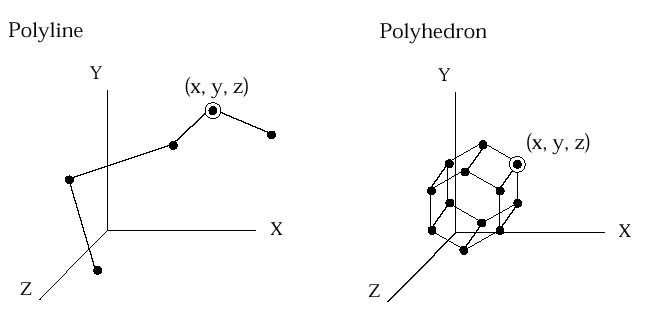
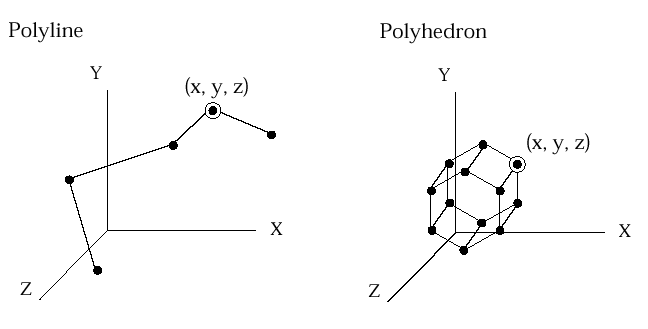
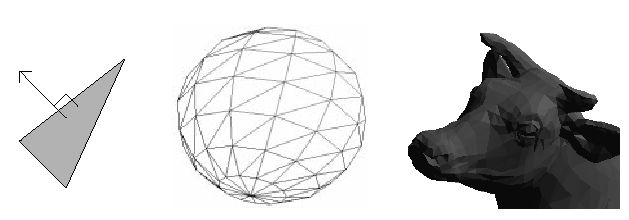
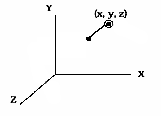
- Line segments, polylines, polygons, polyhedra
- Triangles and tri-meshes
|
|
13
|
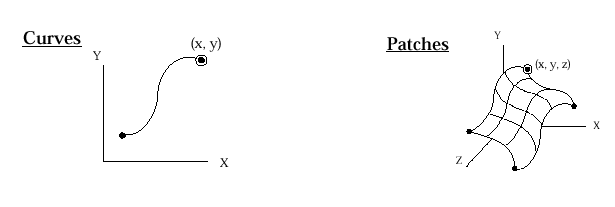
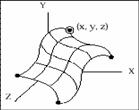
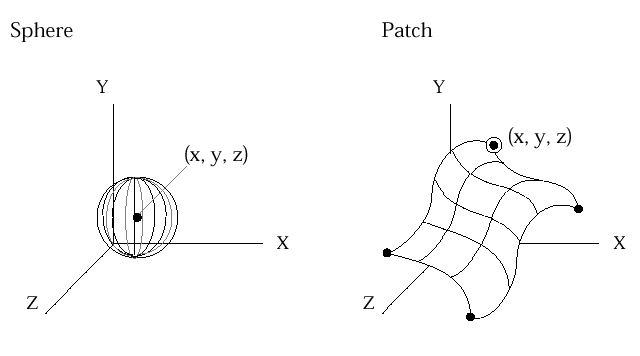
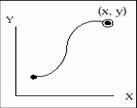
- Curved surfaces with implicit or parametric equations (splines)
|
|
14
|
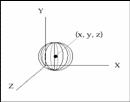
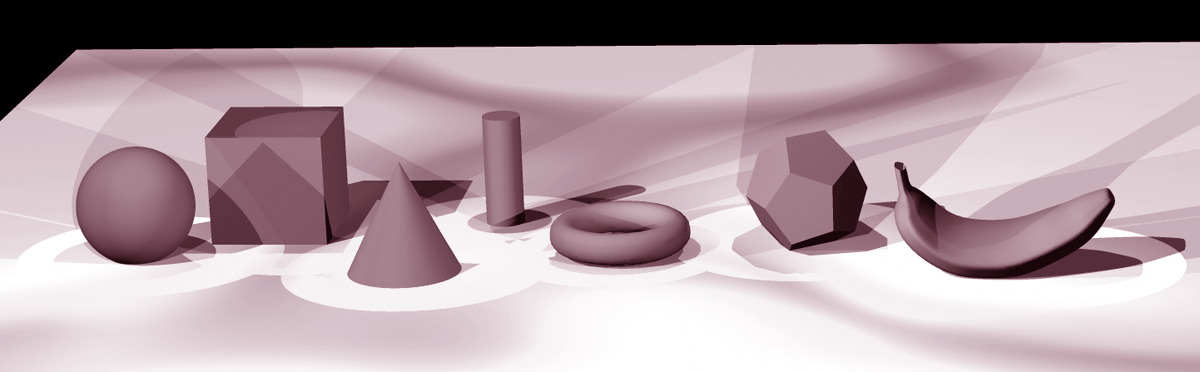
- Platonic solids (and banana)
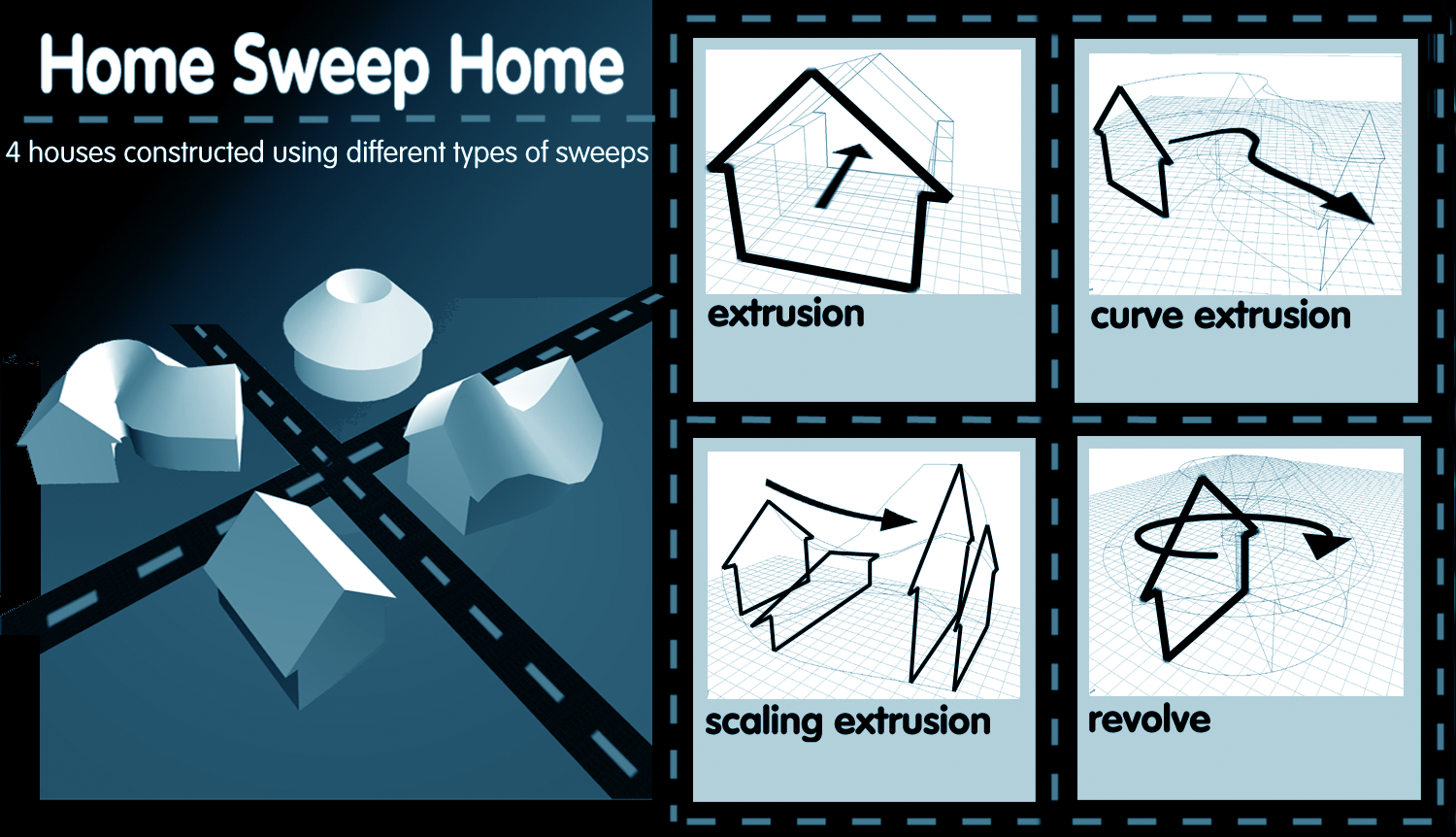
- Sweeps (aka “generalized cylinders, ducts”)
|
|
15
|
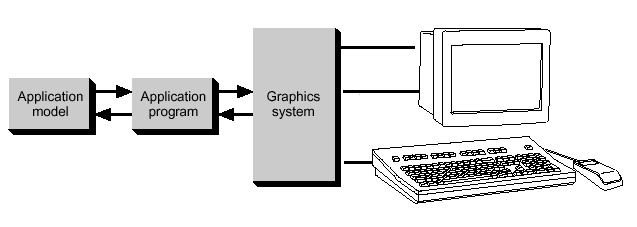
- Graphics library/package (e.g., OpenGL™, DirectX ™) is intermediary
between application and the display hardware (Graphics System)
- Application program maps application objects to views (images) of those
objects by calling on graphics library
- User interaction results in modification of model and/or image
- Images are usually means to an end: synthesis, design, manufacturing,
visualization,…
- This hardware and software framework is nearly 4 decades old but is
still useful, indeed dominant
|
|
16
|
- Primitives (polygon, polyhedron, triangle mesh…)
- Attributes
- color
- line style
- material properties for 3D
- Lights
- Transformations
- Camera
|
|
17
|
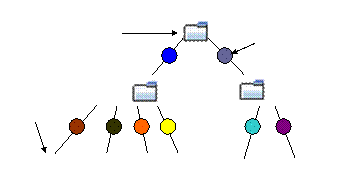
- Object construction using assemblies/hierarchy of parts à la Sketchpad’s
masters and instances; leaves contain primitives
- Aid to realism
- objects, camera use realistic motion for animation
|

 Notes
Notes