|
1
|
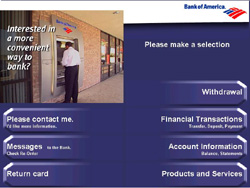
- Tasks in virtually every field now employ visual software, from check
out at McDonalds to industrial design to advertising.
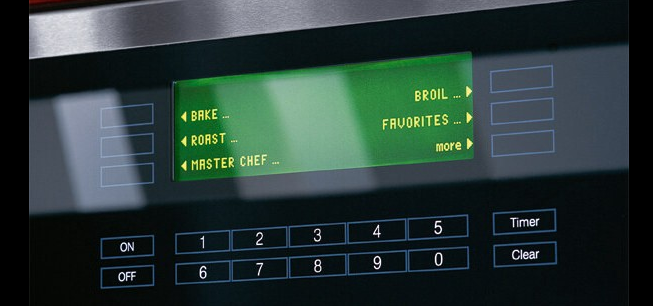
- Ubiquitous computing, often with graphics (from PDIs to kitchen
appliances)
- Games
- Multimedia term papers in HS
- Personal web pages
- Display tech always improving (panels, OLEP)
|
|
2
|
- Like printing press on steroids—but not just for text!
- Use it everywhere, send it everywhere, visible from everywhere, etc.
- Distribution better, faster, cheaper than printing press (e.g,: Ofoto (founder
James Joaquin ’86, guest speaker!), Kodak Easy Share, etc.)
- Google now searching over 8 billion Web pages
|
|
3
|
- “Freedom of the press is guaranteed only to those who own one.” A. J.
Liebling
- Moore’s Law and Web and good graphics software puts power of media
image-making in hands of everyone (for better or worse..)
|
|
4
|
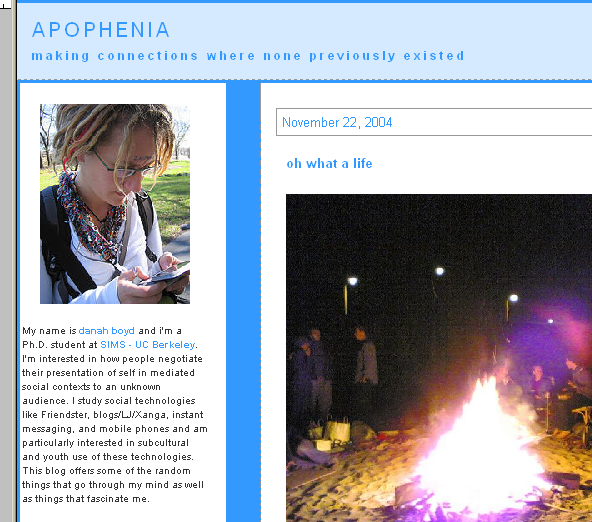
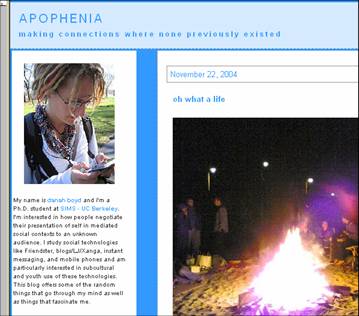
- dana boyd, Brown CS grad
- http://www.
zephoria.org/
thoughts/
- Studying “social computing” for her PhD at Berkeley
|
|
5
|
- Hubble http://wires.news.com.au/special/mm/030811-hubble.htm, electron
microscope, Visible Human Project®, MRI, etc.
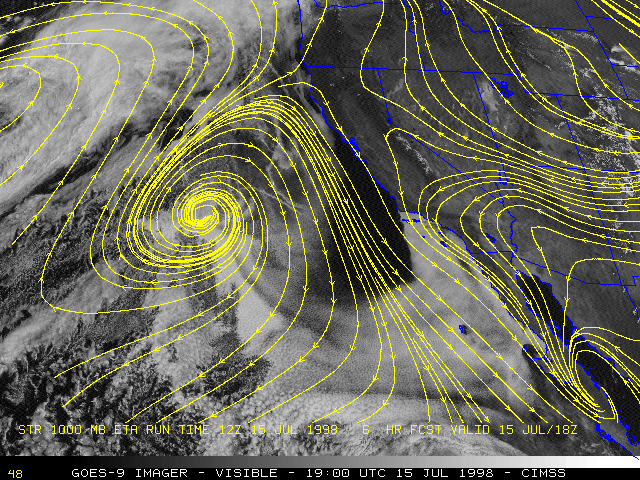
- Results of computations and instrumentation vast only visual
system can take it all in
- Visual computing can let us see the invisible (and inaccessible or
extremely complex).
|
|
6
|
- World as
- Will of deities
- World as clockworks
- Machine/industrial process
- Computation
- Each reflect where we are
- Each has given us more power over
our surroundings
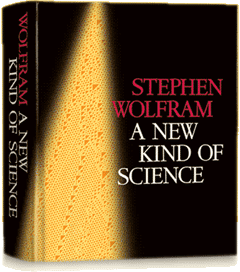
- Wolfram and automata, A New Kind of Science
(NKS Summer School at Brown)
- Fredkin’s Digital Philosophy (everything discrete)
- Kurzweil, Age of Intelligent Machines
- Pat Hanrahan: Can describe things in nature computationally that were
not attempted before—how light interacts with marble…
|
|
7
|
- Universal language
- Film and TV are the US’s second largest export after aerospace. $3.6b to
Europe alone in 1992
Visual Culture, Nicholas Mirzoeff
|
|
8
|
- Visual Culture: Critical discussion of visual materials and history
- Art and Design: Basic concepts in 2D, 3D, and time-based visual art and
design
- Vision Science: Basic concepts in neuroscience, perception, cognitive
science, etc.
- Computer Graphics and Visualization (CS): Basic concepts in the science
of computer graphics
- Image Economy: The economic implications of creating, distributing,
purchasing, exchanging visual (largely digital) materials
- Philosophy: How new types of visual and simulation technology change our
view of reality
|
|
9
|
|
|
10
|
|
|
11
|
|
|
12
|
|
|
13
|
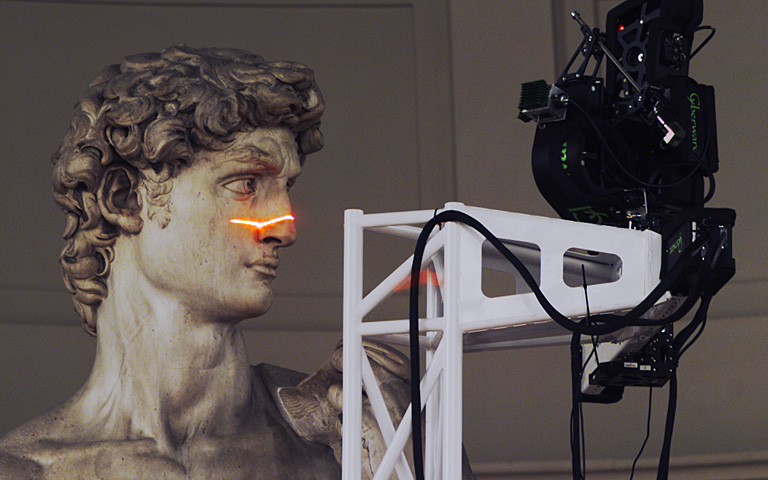
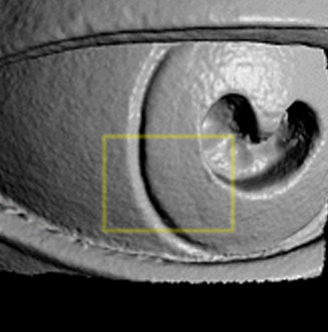
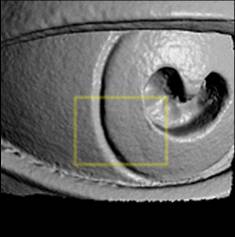
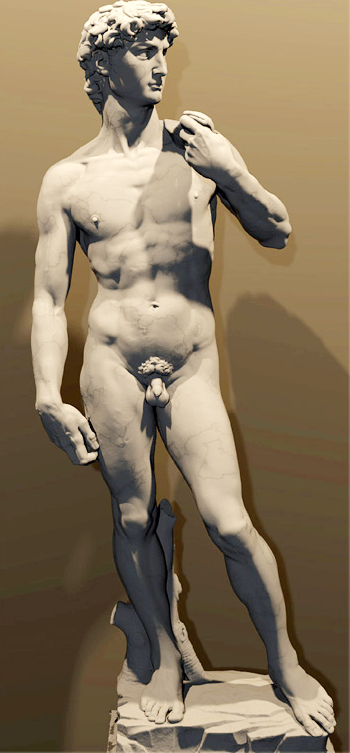
- Create an explorable 3D model
- Stanford and University of Washington
- Custom Cyberware statue scanner
|
|
14
|
|
|
15
|
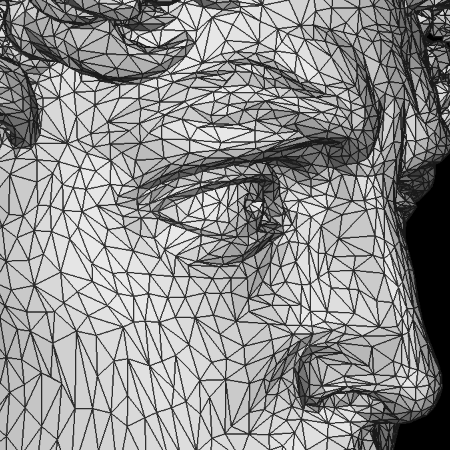
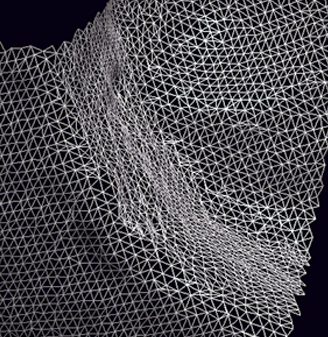
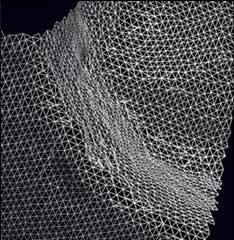
- Entire statue in color
- 2 billion polygons
- 7,000 color images,
- 32 gigabytes.
|
|
16
|
|
|
17
|
|
|
18
|
|
|
19
|
|
|
20
|
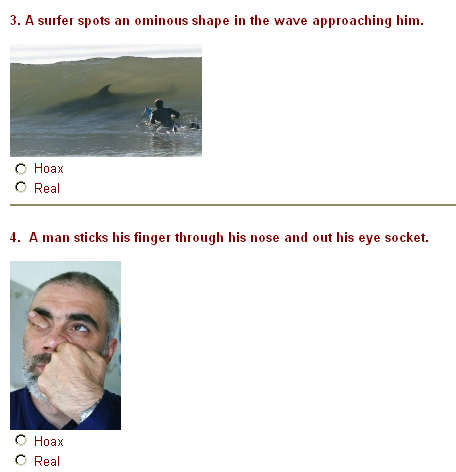
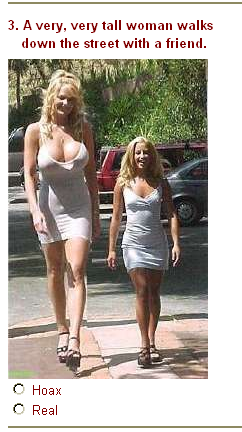
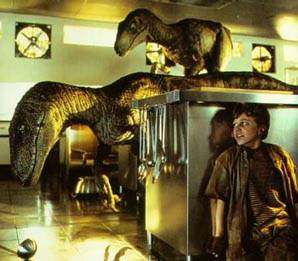
- http://www.museumofhoaxes.com/tests/hoaxphototest2.html
|
|
21
|
|
|
22
|
- Look at visual materials critically
- Genres employed
- Technologies used
- Intentions of creator(s) and intended audiences
- Visual strategies used
- Awareness of cultural context of image creation and presentation
- Design effective visual materials
- Applying above areas to one’s own work
- Create economic and evocative communications
|
|
23
|
- “Just as … one does not learn to play the guitar by listening to the
radio, one does not become visually literate by simply looking at
images.” [Burmark, Visual Literacy]
|
|
24
|
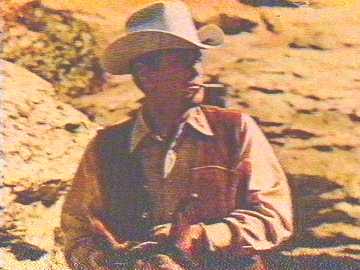
- Jack Landry, Marlboro brand manager: "In a world that was becoming
increasingly complex and frustrating for the ordinary man,…the cowboy
represented an antithesis -- a man whose environment was simplistic and
relatively pressure free. He was his own man in a world he owned."
|
|
25
|
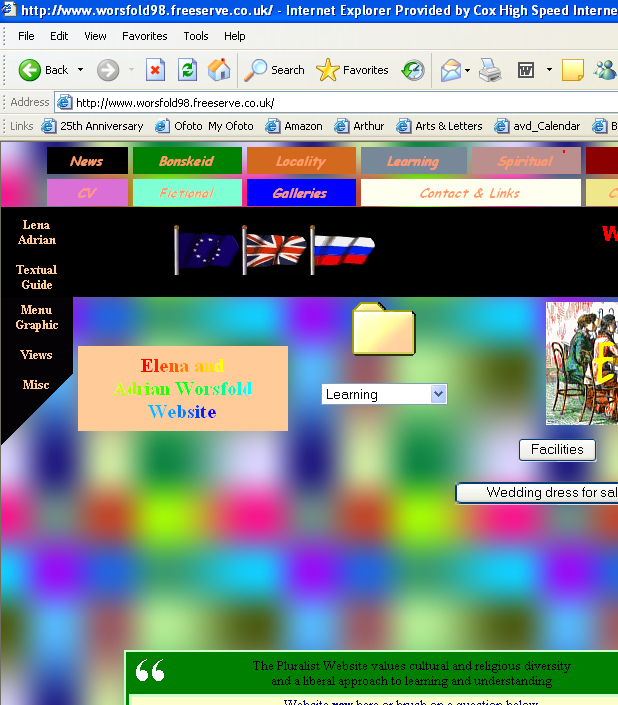
- Not just knowing it’s bad, but why, and how to fix it…
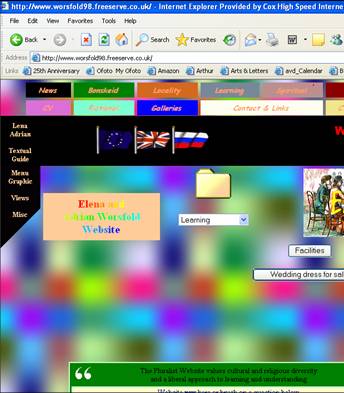
- http://www.worsfold98.freeserve.co.uk/
|
|
26
|
- Whether art class
- Or science
- Or digital family photo album
|
|
27
|
|
|
28
|
- Visual thinking key to creativity in many fields
- Kekule's vision of the structure
of the benzine ring, basis of all organic chemistry
- Elias Howe's nightmare of cannibals attacking, whose spears happened to
have holes in their heads à sewing machine.
- Einstein's “train ride on a beam of light” remade the whole of physics
and helped remake the whole of science.
- Who knows what more universal and multidisciplinary visual digital
literacy will bring?
|
|
29
|
- [Burmark 2002] Lynell Burmark. Visual Literacy: Learn to See, See to
Learn.
Association for Supervision & Curriculum Development, 2002,
- [Gladwell 2002] Malcolm Gladwell. The tipping point : how little things
can make a big difference. Back Bay Books, 2002, ISBN:0316346624.
- [Jay 1993] Martin Jay. Downcast Eyes: The Denigration of Vision in
Twentiety-Century French Thought. University of California Press, ISBN:
0520088859.
- Good Looking: Essays on the Virtue of Images, Barbara Maria Stafford, MIT
Press, 1998 [to be added to resources list]
- [Stephens 1998] Mitchell Stephens. The Rise of the Image, The Fall of
the Word. Oxford University Press, 1998, ISBN 0195098293.
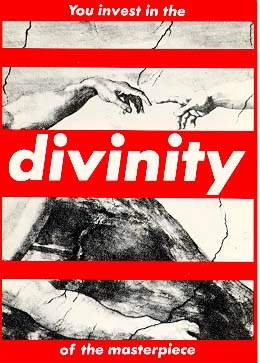
- ART: Barbara Kruger, “You invest in the divinity of the masterpiece,”
Unique photostat. 72 x 48 in. New York, Museum of Modern Art, 1982.
|
|
30
|
- Fredkin: Digital Philosophy (DP) http://www.digitalphilosophy.org/index.htm
- Stephen Wolfram http://www.wolframscience.com/thebook.html
- Ed Lasowska http://www.cs.washington.edu/homes/lazowska/faculty.lecture/exponential/laptop.html
- Full text of The Republic: http://classics.mit.edu/Plato/republic.html
- Similarities between Plato’s Cave and the movie The Matrix: http://whatisthematrix.warnerbros.com/rl_cmp/new_phil_partridge.html
- Bloom, Western Canon http://www.literarycritic.com/bloom.htm
- Memes and Memetics in the Principia Cybernetica Web http://pcp.lanl.gov/MEMES.html
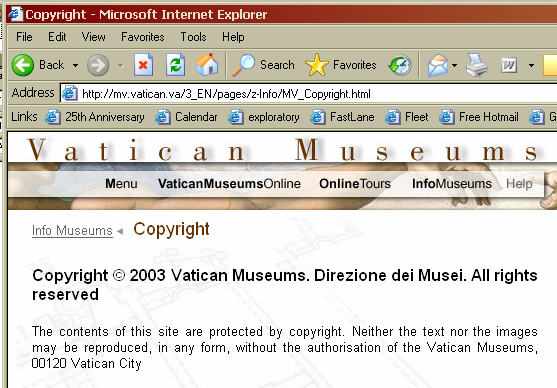
- Vatican Web http://www.vatican.va. Vatican site registers over 50m
hits/month http://www.cbsnews.com/stories/2003/06/24/tech/main560158.shtml
|

 Notes
Notes