|
|
|
Visual computing can
let us see the invisible (and inaccessible or extremely complex).
|
|
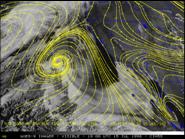
For example, we can
now see formerly non-visual parameters such as wind flow direction and
velocity and temperature, all at once, in a scientific visualization system
of a wind tunnel. We can also view and work with single atoms and visually
analyze data from far reaches of the universe.
|
|
|
|
Not just the
instruments, but processing of the data that is important.
|
|
|
|
|
|
|
|
____________________________________________________________
|
|
SOURCES
|
|
http://www.nlm.nih.gov/research/visible/visible_human.html
|
|
|
|
DNA fragments with
2686 base pairs (914nm length) acquired with Atomic Force Microscope. This
sample was prepared and measured by Fernando Moreno-Herrero (Lab. Nuevas
Microscopías, UAM) http://www.nanotec.es/img_14.htm
|
|
|
|
-----------------
|
|
http://hubblesite.org/newscenter/newsdesk/archive/releases/2003/30/
|
|
|
|
Wind =
http://cimss.ssec.wisc.edu/goes/misc/shipt_str.gif
|
|
|
|
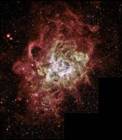
Firestorm of Star Birth Seen in a Local
Galaxy
View all images
|
|
This
festively colorful nebula, called NGC 604, is one of the largest known
seething cauldrons of star birth seen in a nearby galaxy. NGC 604 is similar
to familiar star-birth regions in our Milky Way galaxy, such as the Orion
Nebula, but it is vastly larger in extent and contains many more recently
formed stars. This monstrous star-birth region contains more than 200
brilliant blue stars within a cloud of glowing gases some 1,300 light-years
across, nearly 100 times the size of the Orion Nebula.
|
|
|