|
1
|
|
|
2
|
- Culture wars and real wars exacerbated by media
- From France to Islamic countries—trying to keep American
media/culture out…
- Japan greedily absorbs American culture, modifies it and feeds it back,
while traditional elements try to preserve Japanese culture
- Anime (turned American comic books into their own medium, now widely
read/viewed-as-animation in the US)
|
|
3
|
- Basic theory and terminology
- Saussure, Peirce, examples
- Applications of theory
- Use in advertising
- Ideological critique
- Semiotics in discourse theory and Barthes’ mythologies
- Limits of semiotic theory
- Inherent limits
- Social/political/academic issues
|
|
4
|
- Paddy Whannel: “Semiotics tells us things we already know in a
language we will never understand.”
from Semiotics, Structuralism, and Television, Ellen Seiter,
1992. [http://jcomm.uoregon.edu/~cbybee/j388/semiotics.html]
|
|
5
|
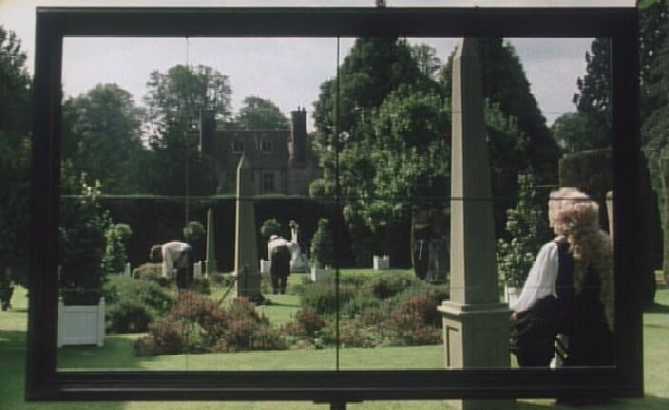
- Image as “window” looking out into nature, natural
signs—no need for decoding
- Vs.
- Image as “text”, conventional signs—need to be decoded
- Our stance: Interpretation partially wired/natural, partially
learned/conventional
|
|
6
|
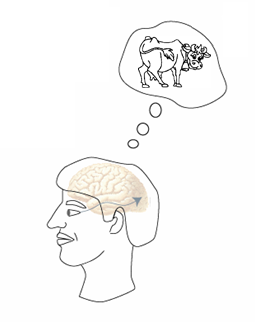
- Relationship between the two subjects debated in many fields see
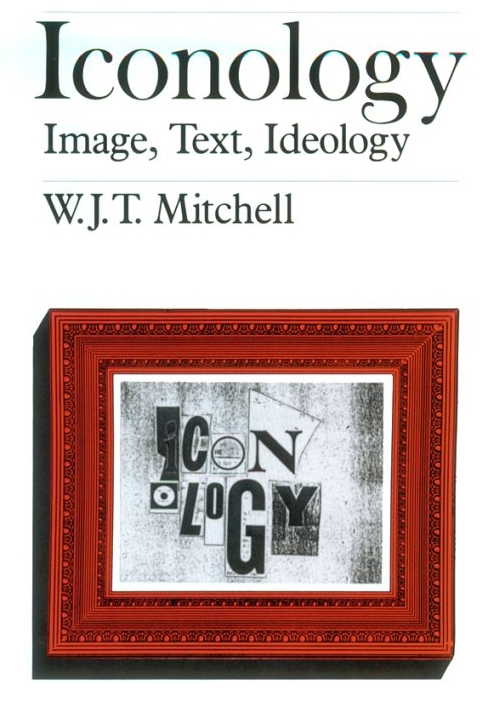
[Mitchell 1987] Iconology: Image, Text, Ideology
- Why discuss images?
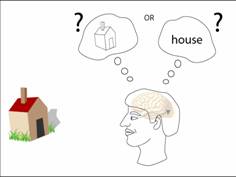
- Is thought initially conceived of in words? Pictures? other?
|
|
7
|
- Sapir: “The fact of the matter is that the "real world"
is to a large extent unconsciously built up on the language habits of
the group.”
- Whorf: “…the world is presented in a kaleidoscopic flux of
impressions which has to be organized by our minds — and this
means largely by the linguistic systems in our minds.” Whorf’s
Language, Thought and Reality, 1964 pp. 212–214
- “Sapir-Whorf” hypothesis: language affects (perhaps
determines) the way we see/understand the world around us.
|
|
8
|
- Saussure (a founder of semiotics) believed that “thought is
a shapeless mass, which is only ordered by language. […] no
ideas preexist language; language itself gives shape to ideas and
makes them expressible.” Dr. Mary Klages, Associate Professor of
English, University of Colorado at Boulder, http://www.colorado.edu/English/ENGL2012Klages/saussure.html
- Structuralism: what are the units of the system and how can they be
combined?
- The "units" in a Tinkertoy set: the colored rods, and
connectors and wheels, and attachments; the "rules" of
Tinkertoy construction = rods go into holes. Everything you can make
out of Tinkertoys uses the units according to the rules. Doesn’t
consider what you actually make. Dr. Mary Klages, Associate Professor
of English, University of Colorado at Boulder, http://www.colorado.edu/English/ENGL2012Klages/saussure.html
- For language, units=words (or phonemes) and combination rules=grammar.
|
|
9
|
- Based on theories (such as Structuralism) from linguistics
- Semiotics studies how visual meaning is created, not what the meaning is
|
|
10
|
- Few believe that language determines thought, influence likely…but
doesn’t mean language=thought
- Visual view
- Arnheim: “I see no way of withholding the name
‘thinking’ from what goes on in perception.” [Visual
Thinking, p.14]
- Findings in perception, neuroscience (next lectures)
- Non-senses-based, non-language view
- Stephen Pinker: Idea of “mentalese”
|
|
11
|
- Evaluating your approach
- Does it take images seriously (goal of Power of Images lectures)?
- Does it consider the social context in which the image was made and is
viewed?
- Does it consider your own “ways of seeing”?
- Methodology characteristics
- What are main sites of research?
- Production of image (how it is made)
- Image itself (what it looks like)
- Audience (how it is seen)
- What are key “modalities” of interest?
- Technological (tools used)
- Compositional (formal design strategies)
- Social (economic, political, social relations, institutions and
practices, cultural settings, etc.)
|
|
12
|
- Approach
- Takes images seriously – Yes, in wide range of materials,
including “everyday”/popular images
- Considers the social context in which the image was made and is viewed
- Considers your own “ways of seeing”
|
|
13
|
- The Theory of Signs
- How do we get meaning from an image?
|
|
14
|
- Approach
- Take images seriously – including “everyday”
materials
- Consider the social context in which the image was made and is viewed
–Semiotics frequency does this, not always.
- Consider your own “ways of seeing”
|
|
15
|
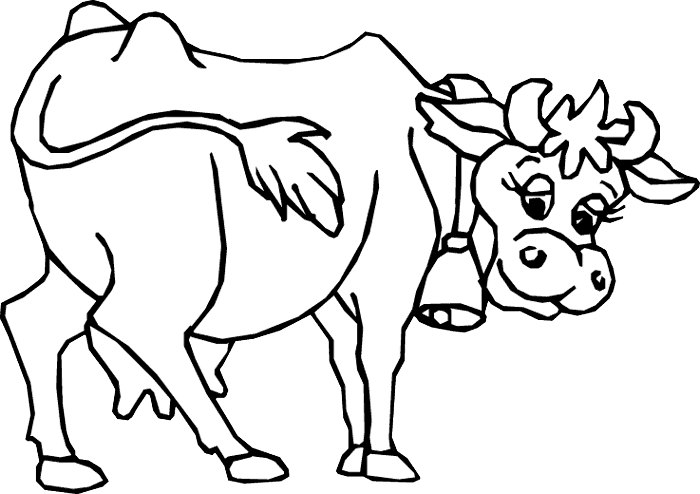
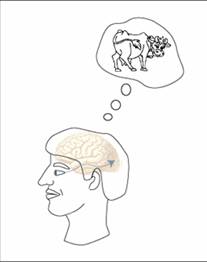
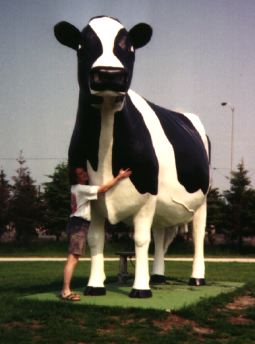
- Sign: The basic unit of language (visual or otherwise)
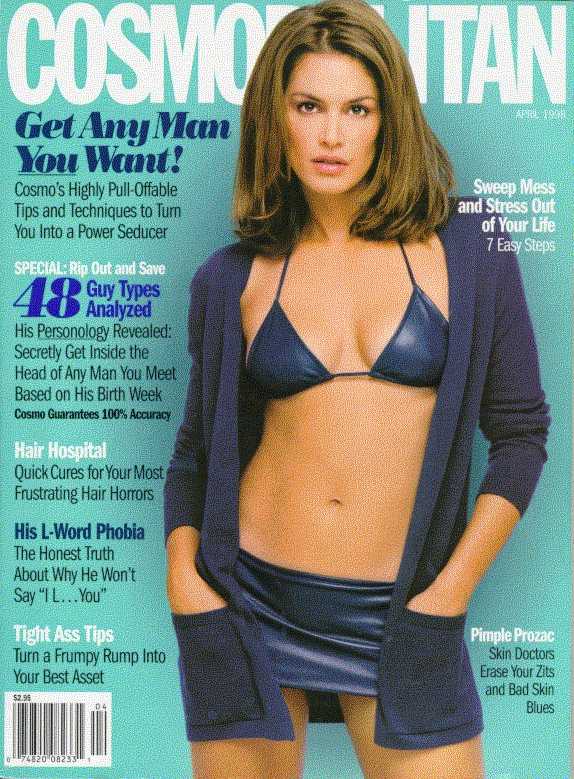
- Signifier: the visual thing you see (e.g., letters in a word, a woman
in a photo)
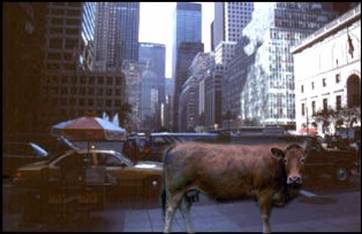
- Signified: concept or object (what the sign implies). We interpret the
letters “cow” to mean a big farm animal. We may also
interpret a photo of a woman in a car ad to mean something beyond
“a woman happened to be near the car.”
- Referent: the actual object depicted (e.g., the real woman/actress who
was in the ad)
- Code: Conventionalized ways of making meaning (e.g., highway signs,
advertising, etc. all have established codes)
|
|
16
|
|
|
17
|
|
|
18
|
|
|
19
|
- Icon: signifier looks like signified (photos, many diagrams); NOT the
same meaning
as “icon” in computer graphics
- Index: some inherent visual relationship between signifier and signified
- Symbol: conventionalized but visually arbitrary signifier-signified
relationship
- Many (if not most) a mixture
|
|
20
|
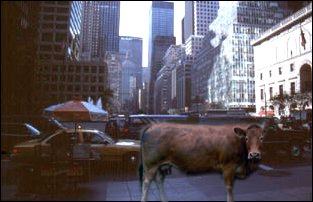
- Denotative: describing or indicating something (e.g., a cow was in this
field)
- Connotative: Another level of coding, usually signifying higher-level
meanings (e.g., we should return to our agricultural ways)
- Metonymic: signifier is associated with something else and thus
represents that something else. (The White house can be used to
represent the President.)
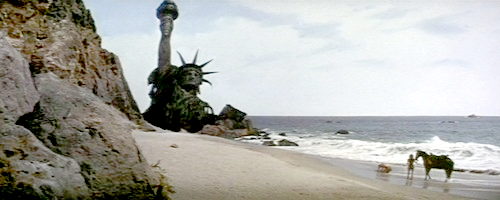
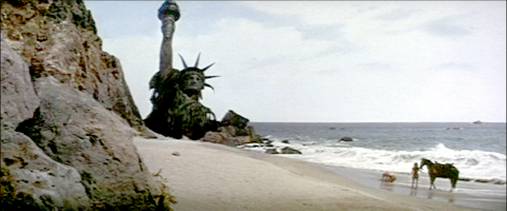
- Synecdochal: signifier is part of a whole, which it then represents (or
the whole represents a part). The Statue of Liberty is often used to
signify NYC.
|
|
21
|
|
|
22
|
- Approach
- Take images seriously – including “everyday”
materials
- Consider the social context in which the image was made and is viewed
- Consider your own “ways of seeing”
|
|
23
|
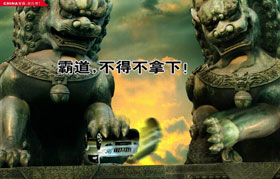
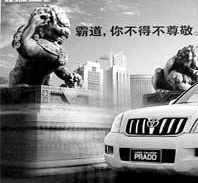
- Signifier: the image of the Chinese lions
- Signified: traditional Chinese authority (image of lion connotes Chinese
power, authority)
- Audience “…Toyota said the ads were nothing but commercials,
and do not imply ‘any other meanings’.” http://www.chinadaily.com.cn/en/doc/2003-12/05/content_287571.htm
|
|
24
|
- Basic theory and terminology
- Saussure, Peirce, examples
- Applications of theory
- Use in advertising
- Ideological critique
- Semiotics in discourse theory and Barthes’ mythologies
- Limits of semiotic theory
- Inherent limits
- Social/political/academic issues
|
|
25
|
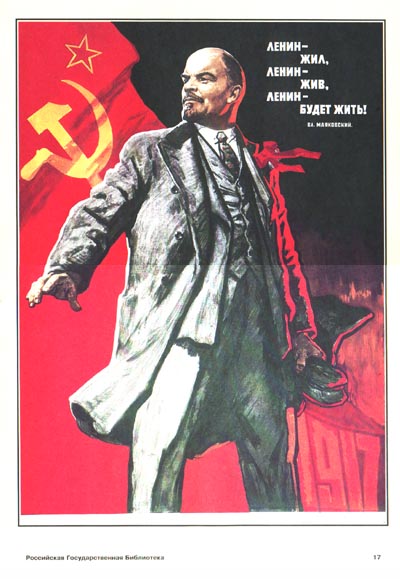
- Semiotic analysis often used to expose ideologies
- “Ideology is knowledge that is constructed in such a way as to
legitimate unequal social power relations…” VM p70
- Determines what one can say, know, and do—not just by making rules
or laws but by shaping what one perceives as natural and real.
- We all participate in ideologies
|
|
26
|
- “The Imperialist player begins the game with Patriotism. He
chooses to spend 2 Military Influence cards to purchase Tactics. He
could then choose to spend that Tactics, as well as his Patriotism, to
purchase the Level 2 Propaganda Advancement, as specified in the cost
section of the Propaganda card.”
|
|
27
|
|
|
28
|
- Examine one or more of the three steps in visual message process
- Production of image (how it is made)
- Semiotics focuses on: Image itself (what it looks like)
- Audience (how it is seen)
|
|
29
|
- Key factors to consider
- Technological (tools used): semiotics pays attention to technology of
the still camera and the movie camera
- Compositional (formal design strategies): Relationships between
signifiers key factors in analysis
- Social (economic, political, social relations, institutions and
practices, cultural settings, etc.): Strong emphasis on social
repercussions of images and ideology represented, although audience
often assumed
|
|
30
|
- Denotative/Connotative and Peircian analyses
- http://omni.bus.ed.ac.uk/opsman/quality/SEM_green_run.htm
- This is a marketing Web site at the University of Edinburgh with many
good links.
|
|
31
|
- Looking not at just one image or text but a whole social, political,
economic, emotional, etc. context in which the image (or other material)
is produced and understood.
- Examples: Looking at x-rays in terms of the medical discourse (doctors,
nurses, managed care, hospitals, whole language of anatomy and other
medical concepts and terms), or a Rembrandt in terms of art discourse
(museums, galleries, publications, auction houses, etc.)
- All the elements of a discourse relate to each other (intertextuality)
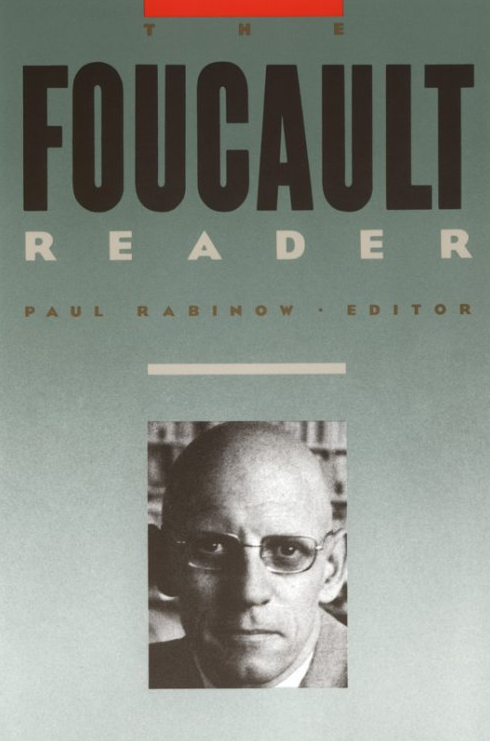
- Foucault: Our sense of self made through the operations of discourse.
- Determines what types of actions feel possible to both those with and
without with power. In constant flux…
|
|
32
|
|
|
33
|
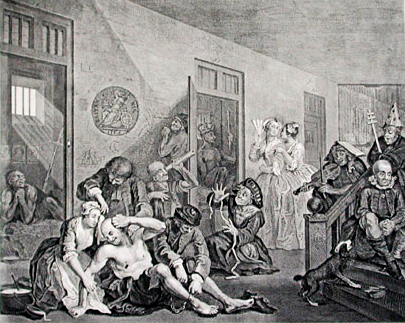
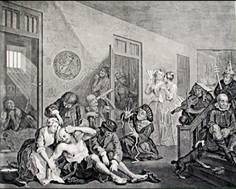
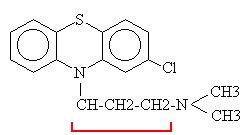
- The changing visual, textual, analytical discourse of
“madness”
- Madness and Civilization : A History of Insanity in the Age of Reason,
Michel Foucault
|
|
34
|
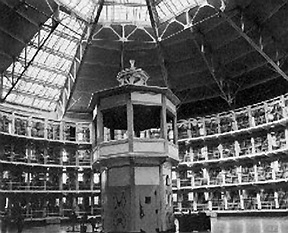
- The changing visual, textual, analytical
discourse of punishment, from public
torture to today’s prison systems
- Discipline and Punish: The Birth of the Prison (Foucault ,1975)
- Famous for analysis of Jeremy Benthem’s “panopticon”
(1791)
- “On 2 March 1757 Damiens the regicide condemmed 'to make the
amende honorable before the main door of the Church of Paris', where he
was to be 'taken and conveyed in a cart, wearing nothing but a a shirt,
holding a torch of burning wax weighing two pounds'; then, 'in the said
cart, to the place de Greve, where, on a scaffold that will be erected
there, the flesh will be torn from his breasts, arms, thighs and calves
with red-hot pincers, his right hand, holding the knife with which he
committed the said parricide, burnt with sulphur, and,on those places
where the flesh will be torn away, poured molten lead, boiling oil,
burning resin, wax and sulphur melted together and then his body drawn
and quartered by four horses and his limbs and body consumed by fire,
reduced to ashes and his ashes thrown to the winds' (Pieces originales .
. ., 372-4). “ D&P
|
|
35
|
- “…an ideological critique bearing on the language of
so-called mass culture… a first attempt to analyze semiologically
the mechanics of this language.” [Mythologies preface]
- “Myth…transforms history into nature.” [mythologies,
pp?]
|
|
36
|
- The World of Wrestling
- “There are people who think that wrestling is an ignoble sport.
Wrestling is not sport, it is a spectacle, and it is no more ignoble to
attend a wrestled performance of suffering than a performance of the
sorrows of Arnolphe or Andromaque."
- Wine and Milk
- “Wine is a part of society because it provides a basis not only
for a morality but also for an environment; it is an ornament in the
slightest ceremonials of French daily life, from the snack. . . to the
feast. . ."
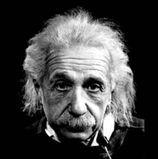
- The Brain of Einstein, Etc.
- “Through the mythology of Einstein, the world blissfully regained
the image of knowledge reduced to a formula."
|
|
37
|
- Basic theory and terminology
- Saussure, Peirce, examples
- Applications of theory
- Use in advertising
- Ideological critique
- Semiotics in discourse theory and Barthes’ mythologies
- Limits of semiotic theory
- Inherent limits
- Social/political/academic issues
|
|
38
|
- Is a system for investigating how meaning is produced, doesn’t
tell us what the meaning is
- Doesn’t offer design guidelines or tools for image creation
- Visual world may not follow linguistic model (difference between image
and text)
- No way to determine which exact parts and relationships of images
constitute “signs” (always subjective, always have polysemy—multiple
meanings for any one sign)
- No end to layers of sign-signifieds (although endings seem to happen
naturally in practice)
- visual signs may not all be merely conventions, as claimed
- Conclusions drawn from single image or image-genre about larger gender
or power relations can be misguided (e.g., women in advertising)
|
|
39
|
- Gombrich (a la Gibson): “If the image involves a code, it is not
an arbitrary or conventional one, but something like a biological
program: ‘our survival often depends on our recognition of
meaningful features, and so does the survival of animals.’ [lc20
in Iconology p 80] [more discussion of this idea in next lecture]
- Barthes
- “The Photograph belongs to that class of laminated objects whose
two leaves cannot be separated without destroying them both: the
windowpane and the landscape…”p6, Camera Lucida
- “The photographic image. . . is a message without a code.” Camera
lucida
|
|
40
|
|
|
41
|
- Exaggerated role of media
- Politicization of everything
- Misinterpretation of science
- Obscure writing
|
|
42
|
- Some confusion of correlation with causation: theory not necessarily
supported by appropriate research/ experiments.
- Media powerful but not one-way influence: feedback loop between media
and world
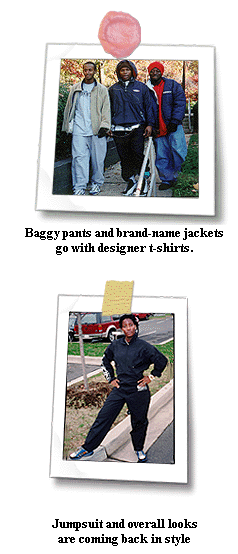
- e.g., hip hop fashions taken up by media, increases number of people
wearing this type of clothing, etc.
- Certain (often unpredictable) factors can be “tipping
points” for success of a fashion or idea. [Galdwell 2002]
|
|
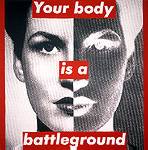
43
|
- Effect of media portrayal of women
- Is it true that changing media portrayals of beauty have created
unrealistic searches for female beautification?
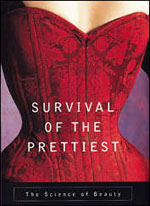
- Some research shows reverse may be true, that “women cultivate
beauty and use the beauty industry to optimize the power beauty
brings.” p4 (Survival of the Prettiest, The Science of Beauty,
Nancy Ectoff, Brown 1976)
|
|
44
|
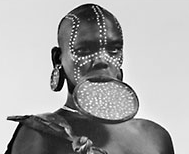
- “..three-month old infants prefer to gaze at faces that adults
find attractive, including faces of people from races they had not been
previously exposed to.”p137
- “..cross-cultural research suggests that shared ideals of beauty
are not dependent on media images.” [from a study of isolated
tribes w/no TV or media exposure who rate faces according to beauty.]
p138
- “…Victor Johnston believes that the faces of beautiful women,
with their plump lips and small jaws, are signs of a female with low
androgen and high estrogen.”p153
- So culture, media important, but not everything…
|
|
45
|
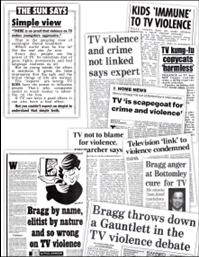
- Media effect on violence
- David Gauntlett Moving Experiences concludes that “research [on
media effects] has failed to show that the media has any kind of direct
or predictable effects on people.” http://theory.org.uk/david/index.htm
- Entertaining article “10 Things Wrong with the Media
‘Effects’ Model” http://theory.org.uk/david/effects.htm
|
|
46
|
- Exaggerated role of media
- Politicization of everything
- Misinterpretation of science
- Obscure writing
|
|
47
|
- Misuse of political implications, wild misuse of science, and obscure
writing all parodied in “the Sokal hoax”
- Not directly concerned with semiotics, but aimed at general culture
theory and scientific trappings
- Sokal published the hoax paper “Transgressing the Boundaries:
Towards a Transformative Hermeneutics of Quantum Gravity” in
Social Text in 1996
- Not a peer-reviewed journal
- Goal of bringing together different viewpoints
- Not regular edition but special issue on “science wars”
- Wanted to include a scientist
|
|
48
|
- “In the second paragraph I declare, without the slightest evidence
or argument, that ‘physical reality’ [note the scare quotes]
... is at bottom a social and linguistic construct.'' Not our theories of
physical reality, mind you, but the reality itself. Fair enough: anyone
who believes that the laws of physics are mere social conventions is
invited to try transgressing those conventions from the windows of my
apartment. (I live on the twenty-first floor.)” http://www.physics.nyu.edu/faculty/sokal/
- Shows misunderstanding of theory, but expresses scientists’
frustration with ‘culture studies” fields
|
|
49
|
- Sokal: “The
fundamental silliness of my article lies, however, not in its numerous
solecisms but in the dubiousness of its central thesis and of the
“reasoning” adduced to support it. Basically, I claim that
quantum gravity -- the still-speculative theory of space and time on
scales of a millionth of a billionth of a billionth of a billionth of a
centimeter -- has profound politicalimplications (which, of course, are
“progressive”). In support of this improbable proposition, I
proceed as follows: First, I quote some controversial philosophical
pronouncements of Heisenberg and Bohr, and assert (without argument)
that quantum physics is profoundly consonant with ``postmodernist
epistemology.'' Next, I assemble a pastiche -- Derrida and general
relativity, Lacan and topology, Irigaray and quantum gravity -- held
together by vague rhetoric about “nonlinearity”,
“flux” and “interconnectedness.” Finally, I jump
(again without argument) to the assertion that “postmodern
science” has abolished the concept of objective reality. Nowhere
in all of this is there anything resembling a logical sequence of
thought; one finds only citations of authority, plays on words, strained
analogies, and bald assertions.” http://www.physics.nyu.edu/faculty/sokal/lingua_franca_v4/lingua_franca_v4.html
|
|
50
|
- Quotes from real theory texts that make no sense http://www.geneseo.edu/%7Ebicket/panop/home3.htm
- “The Postmodernism Generator”
- Generate your own postmodern text using random language and recursive
grammars http://www.csse.monash.edu.au/community/postmodern.html
- Random sampling: “If one examines the cultural paradigm of
narrative, one is faced with a choice: either accept the neodialectic
paradigm of expression or conclude that the law is part of the collapse
of culture. A number of discourses concerning a mythopoetical reality
exist. In a sense, if the Sontagist camp holds, we have to choose
between dialectic situationism and the neoconceptual paradigm of
narrative. “
|
|
51
|
- Images can and should be studied using semiotics, discourse theory and
other methodologies (and not just advertising or “art” but all images)
- Theory excels when it’s demanding of itself
- Clear writing
- Meaningful goals
- Clear relations to other disciplines
- Next week
- Vision science has different perspective
- How can science and theory work together?
- How help us become more effective creators and critical viewers of
visual materials?
|
|
52
|
- Wendy Chung, Brown MCM
- Lynne Joyrich, Brown MCM
- All errors mine…
|
|
53
|
- Books
- [Rose 2001] Gillian Rose. Visual Methodologies: An Introduction to the
Interpretation of Visual Materials. SAGE Publications, 2001.
- [Etcoff 1999] Nancy Etcoff. Survival of the Prettiest: The Science of
Beauty. Doubleday, 1999.
- [Barthes 1972] Roland Barthes, Mythologies. Hill and Wang, 1972.
- [Arnheim 2004] Rudolf Arnheim. Visual Thinking. University of
California Press, 35th Anniversary Edition, 2004.
- [Mitchell 1987] W. J. Thomas Mitchell. Iconology: Image, Text, Ideology.
University of Chicago Press, 1987.
- Links
- Prado ad coverage http://www.chinadaily.com.cn/en/doc/2003-12/05/content_287571.htm
- Foucault, including full text of Archeology of Knowledge http://www.csun.edu/~hfspc002/foucault.home.html
- Structuralism and Saussure http://www.colorado.edu/English/ENGL2012Klages/saussure.html
- 10 Thing Wrong with Media Effects, David Gauntlett http://theory.org.uk/david/effects.htm
- Alan Sokol home page http://www.physics.nyu.edu/faculty/sokal/
|

 Notes
Notes