
1/28/2004 slide 13
Semiology
•The Theory of
Signs
•How do we get
meaning from an image? 



Late-breaking
sign abuse
| How do we know what
these images mean? |
|
| Have to interpret
signs, and not just individual elements but their relationships to one
another (just as individual words don’t’ tell you what a novel is
about… so have to look at how the different image-signs are composed) |
|
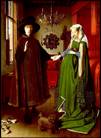
| Decoding can be
straightforward—in religious painting we know that “dog”
stands for fidelity, and the audience for the painting would have known that
too. (iconology) |
|
| But what about
images like a Cosmo cover? Or a nature photograph? (Will say more about
middle images in the next slide) |
|
| Semiotics says that
all communications are composed of
signs that needs to be decoded |
|
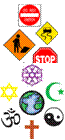
| This is easier to
understand with images that do not look like what they represent: a
six-pointed star doesn’t Look like: Judaism, for instance—you
have to know what it means when used as symbol. Similarly with one of most
emotionally powerful icons of our time—the swastika |
|
| Context and
relationship to other imagery key; CROSS: visually simple, many uses and
meaning changes with context: defense against vampires, Muslim: symbol of
religious oppression, warfare (crusades), blacks in the south -> religious
icons in churches and beyond or KKK/symbols of bigotry/racism. Costume
jewelry worn in ways that offend religious people. |
|
| Emotions these
simple graphics can evoke is amazing. |
|
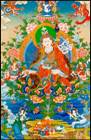
| Similarly, a person
floating on a flower bed isn’t immediately meaningful unless you know
something about Buddhism. |
|
| Writers like Umberto
Eco and others have tried to develop an all-encompassing system for reading
visual, and other, material. |
|
| Short discussion?:
Can the same system be used to read all of these images? Is there any
difference between understanding an “art” image and an
advertising image? A nature photograph? A family snapshot? |
|
| _______________ |
|
| Sources |
|
| Rude signs:
http://www.thejokefactory.org/JF_pictures/Pictures_by_date/2003/06_June_03/MY%20kinda%20Road%20Signs.jpg |
|
| Religious symbols www.lynchburg.edu/
academic/religion/ |
|
| Arnolfini Wedding
Portrait Northern Renaissance oil on wood 1434 by Jan Van Eyck |
|
| full of symbolic
imagery: dog (fidelity), mirror (eye of God), fertility symbols -record of a real event -artist is shown in the mirror on the back wall -great deal of detail |
|
| http://faculty.evansville.edu/rl29/art105/f02/art105-4.html |
|
| Buddha |
|
| http://www.users.bigpond.com/muir_pmg/odiyana/gallery.htm |