|
|
|
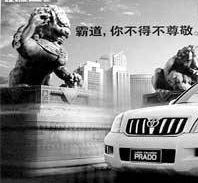
So here is the car
ad we looked at last time very simply.
|
|
Now we can use some
more vocabulary to explain the effects…
|
|
And also, the
relationship between the signifiers makes all the difference in the
message…Some formal methods of mapping out and discussing such
relationship are shown in VM.
|
|
|
|
|
|
Obviously , the
“meaning” can be different depending on whether you are in the
US, ignorant of Japanese-Chinese tensions, or living in China and perhaps old
enough to remember why there are such tensions.
|
|
|
|
Author’s
INTENT for signified differed from audience’s perceived signified.
|
|
|
|
Assuming that Toyota
was not trying intentionally to insult the Chinese, but really was just
trying to see cars… they know images are serious—effective, the
used interesting things from cultural context—knew lions symbol of
power, but they didn’t think how someone in China would interpret the
image.
|
|
|
|
|
|
But which parts are
signs—not clear like looking at words.
|
|
And what about
non-objects—relationships between different objects, or use of color,
etc.
|
|
|
|
|
|
SOURCES
|
|
-----------------------
|
|
Photo: Chinapage.com
|
|
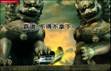
"These ads were
intended to reflect Prado's imposing presence when driving in the city,"
says Julie Du, account manager with Publicis Groupe's Saatchi & Saatchi,
which made the ads.
|
|
"You cannot but
respect the Prado," the ad says.
|
|
But Chinese words
often hold multiple meanings. Prado translates into Chinese as badao,
which also means "rule by force" or "overbearing."
|
|
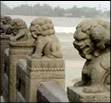
Consumer critics who
called Toyota and posted scathing--occasionally profane--messages in Internet
discussion groups said the lions resembled those flanking the Marco Polo
Bridge, the site near Beijing of the opening battle in Japan's 1937 invasion
of China.
|
|
The Toyota fiasco
highlights the tricky cultural and historical pitfalls that afflict marketing
for even the savviest China-based foreign companies. On one hand, the ad
industry increasingly agrees that despite rampant nationalism, patriotism
doesn't build brands. But Toyota and others recently have discovered that
they can't ignore how strongly politics shapes Chinese consumer sentiment.
|
|
As China's economy
grows at breakneck pace and it prepares for the 2008 Olympics in Beijing,
Chinese people may be growing more nationalistic. An October 2003 survey by
WPP Group's Ogilvy & Mather advertising firm found that 34% of young
people in prosperous southern China found patriotism to be "extremely
important"--a 10 on a scale of one to 10.
|
|
"Young people
are indoctrinated from very early on in school to be patriotic," says
Joseph Wang, Ogilvy's group managing director for Hong Kong and southern
China.
|
|
Some Chinese brands
such as Coca-Cola competitors Jianlibao and Fei Chang Kele try to tap that
patriotism in ads. "The Chinese people's own Cola!" exhorts ads for
Fei Chang Kele.
|
|
But an increasing
number of ad agencies are finding that a patriotic appeal doesn't lure
Chinese shoppers to sportswear brands such as homegrown favorite Li-Ning
Sports Goods over Nike just because it originates in China.
|
|
Indeed, the Ogilvy
survey found that the strongest patriots were just as likely to buy foreign
brands as shoppers who claimed to be indifferent. Ninety-four percent of the
"more patriotic" drank Coke, compared with 100% of the
"moderately patriotic." Only 19% considered country of origin a
factor in brand choice.
|
|
"Brand-buying
today is a personal activity. Patriotism is [a] collective activity,"
Ogilvy's Mr. Wang explains.
|
|
As a result,
agencies are dumping patriotic pitches in favor of pragmatism. "It's the
same as in politics: A political party can go only so far on a patriotic
platform. Ultimately, if they don't deliver the goods, voters give them the
boot," says Mickey Chak, planning director of DDB Worldwide
Communications Group Inc. China.
|
|
Foreign sportswear
makers who sponsor local Chinese teams often receive a lukewarm response. As
a result, brands increasingly are highlighting their global significance
instead. "Many sports fans in China aren't just interested in a sport
because there are Chinese players in it," Mr. Chak says. "Long
before Yao Ming, basketball enjoyed popularity, and Chinese consumers bought
into the NBA."
|
|
But even though they
are dumping patriotism, advertisers such as Toyota have bungled by going too
far and ignoring it.
|
|
Despite longstanding
wartime antagonisms, the Chinese have become major consumers of Japanese
products--which carry a high-quality cachet--even as they complain about
accidents involving Japanese products, or Japanese service manuals that make
political gaffes by identifying Taiwan as separate from China.
|
|
Bayerische Motoren
Werke of Germany faced weeks of negative publicity in state-run newspapers
during October after a woman in the northeastern Chinese city of Harbin
crashed into a crowd with her BMW X53.0 Diesel Sport. Marketed to China's
elite upper-class, the BMW brand became a target of populist resentment from
millions of laid-off former state workers left behind by China's economic
boom.
|
|
Many agencies have
implemented "disaster checks" before their campaigns go live to
make sure that they haven't been blinded to a political sore spot.
|
|
Toyota will
establish a "supervisory system" for its marketing, a
public-relations officer in charge of its Chinese office says.
|
|
Saatchi &
Saatchi, which declined to discuss the role of patriotism in advertising, is
working on new Toyota Prado ads but doesn't yet have a release date for
them." (Geoffrey A. Fowler, The Wall Street Journal, January 21, 2004)
|
|
http://www.loper.org/~george/trends/2004/Jan/950.html
|
|
|
|
Also dragon
|
|
Their ire was raised
when Leo Burnett Shanghai Advertising, a Sino-United States joint venture,
created a presentation for Nippon Paint showing a freshly-painted pillar
whose twining dragon, unable to keep its grip because Nippon Paint is so
smooth and silky, ends up in a coil at the bottom.
|
|
http://www.thestandard.com.hk/news_detail_frame.cfm?articleid=51061&intcatid=2
|
|
|
|
____________________________________________
|
|
SOURCES
|
|
http://english.people.com.cn/200312/05/eng20031205_129766.shtml
|
|
http://www2.chinadaily.com.cn/en/doc/2003-12/09/content_288694.htm
|
|
|