|
1
|
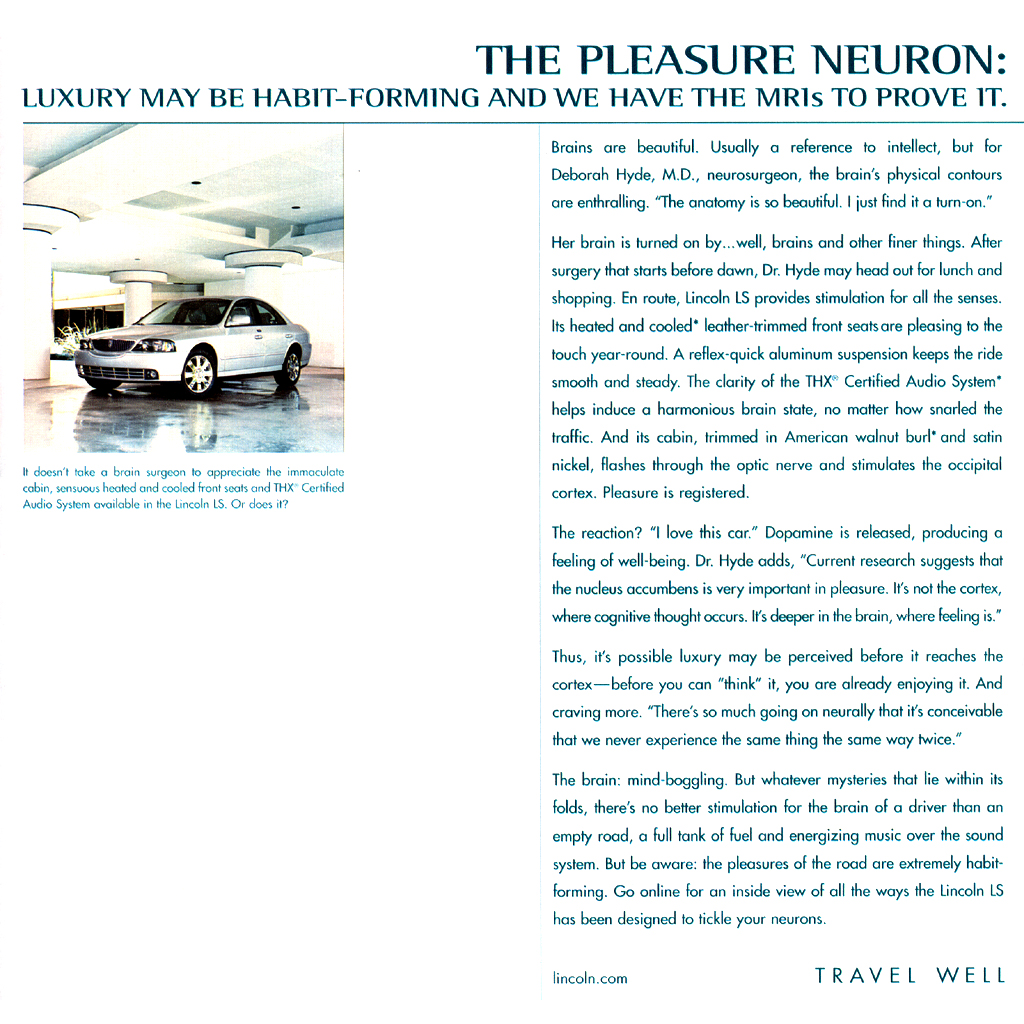
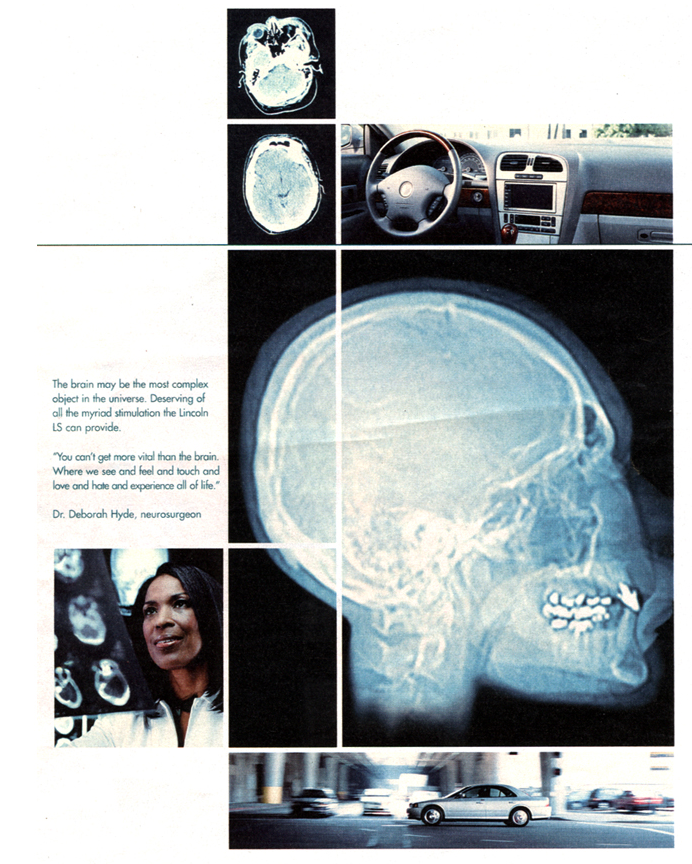
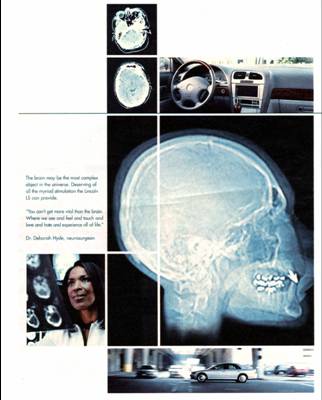
- But first, a vehicle that stimulates the visual cortex in a
neuroanatomy-based car ad ??!
|
|
2
|
|
|
3
|
|
|
4
|
- Power of lines
- Types of drawing
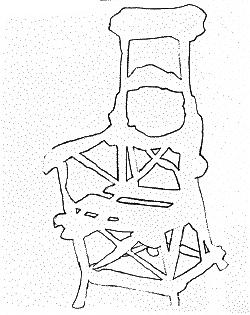
- Drawing exercises
|
|
5
|
- “Every endeavor of the human mind, including the most abstract ones such
as poetry and philosophy, has made use of drawings…This has been true in
every culture throughout time.”
[Massironi 2001 p.2]
- Cave art ~30,000BC
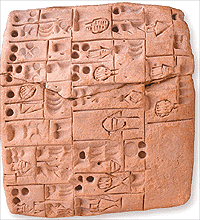
- First writing ~3000BC
- Basic components of drawing unchanged for thousands of year
- Viewpoint (location and distance) [not always a factor]
- Style (from projection/perspective to abstraction)
|
|
6
|
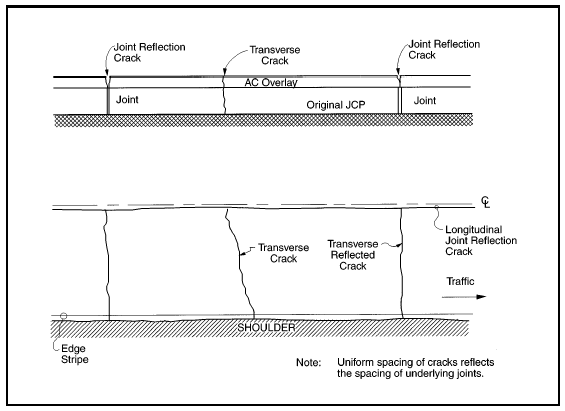
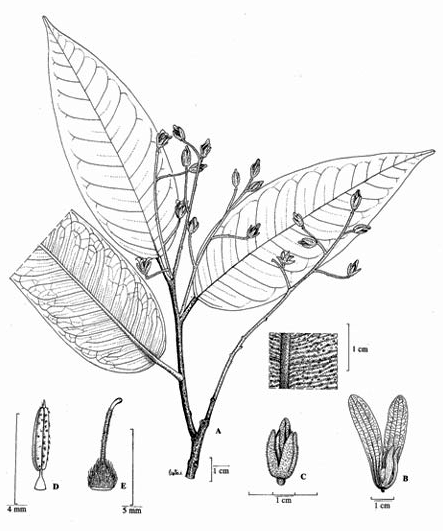
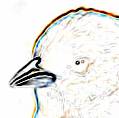
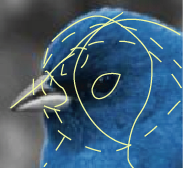
- Lines (e.g., in pen&ink illustrations) can represent
- Objects
- Edges (contours, silhouettes, etc.)
- Cracks
- Textures
|
|
7
|
- Illustrative
- Fine Art
- Operational
- Taxonometric
- Graphics, Diagrams, Graphs, Maps
|
|
8
|
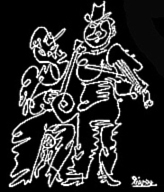
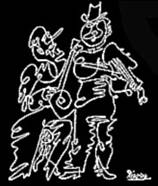
- How can a simple line represent almost anything we can see or think of?
- Because linear elements and shaded areas trigger the perceptual “rules”
we just studied
- Most preconscious—don’t have to think about “what things looks like”
- We experience “wholes” before parts, making parts more difficult to
attend to
- Can learn to focus on detail and visual structure but brain helping you
by not requiring this
- Learning to draw consists in part of
- Bringing some preconscious operations into consciousness (e.g., seeing
a line, not the edge of a 3D form)
- Halting the process of object recognition and categorization
|
|
9
|
- Information from this class and other courses can help guide you and
provide insights, but to increase your drawing skill, you need to make
drawings.
- Often fear, nervousness, frustration, and disappoint keep people from
learning how to draw
- Need to disengage judging, anxiety-ridden part of brain…
|
|
10
|
- Verbal knowledge (left brain) gets in the way of visual knowledge (right
brain).
- To draw, need to “see” only one view, not canonical, not whole category
- “Visual agnostics” (patients who can see but not name things) copy
images very well!) [Palmer 1999] p432
|
|
11
|
|
|
12
|
- Pre-instruction drawing of hand >>
- Line styles >>
- Upside-down drawing >>
- Non-dominant hand drawing >>
- Rapid drawing >>
- Blind contour drawing >>
- Negative space drawing >>
- Post-instruction hand drawing >>
|
|
13
|
- Draw your non-dominant hand as realistically as possible in 5 minutes.
- This drawing is simply a benchmark and is not assessed.
|
|
14
|
- Line quality in drawings, just as in one's signature, is very personal
and can often distinguished one artist from another. The ability to
create different line styles is also an ongoing area of interest in
computer graphics.
- Work in the handout's rectangular areas, experimenting and practicing
different line qualities.
- Vary
- pressure (shading)
- line direction (crosshatching)
- line form (line thickness)
- speed (gesture)
- Do not draw anything recognizable, simply focus on the abstract line
qualities.
- Try to keep the variables as separate as possible (i.e., not varying
several of them at once).
|
|
15
|
- Painter Malcom Morely
used this technique to
blur the distinction
between realism and abstraction.
- Copy the upside-down
drawing on the worksheet in
the rectangle to the right.
- Try not to let any names of
parts or the whole enter
your thinking.
- For even more accurate reproduction, draw a regular grid in both
rectangles and copy square by square from upper left to lower right.
- Finally, Turn paper right side-up and assess similarity of copy to
original.
|
|
16
|
- Draw your dominant hand using your non-dominant hand as realistically as
possible in 5 minutes.
|
|
17
|
- Draw Dega's ballerina on the worksheet three times, taking appr. 20
seconds seconds per drawing.
- Follow the ordering 1-3 of the outlines spaces.
- Try to capture the overall gesture rather than any specific details.
|
|
18
|
- Draw your hand again (as in pre-instruction drawing) but do NOT look at
your paper at all while drawing.
- Start anywhere on your "hand" and keep the pencil down until
the 5 minutes are up.
- Draw only lines--do not try to shade in areas. Your pencil trail is like
that of an ant crawling over your had. Don't "go" anywhere
without leaving a trace.
- Short pauses (once or twice during the 5 minute period) may be used to
look at the paper and reposition the pencil.
- The goal is to two-fold:
- disengage the judgmental tendency of the mind by preventing access to
the drawing in progress. This relieves stress and lets one focus on
drawing, not self-commentary.
- record the act of seeing and control what is seen and when by exploring
a complex form sequentially with a simple line.
- Notice how your line is used to "see" the edges of a form as
well as the internal wrinkles and other shifts in surface angle.
|
|
19
|
- Virtually all successful representational (and
much abstract) artwork has strong "negative
spaces."
- Draw the designated chair at the front of the
room (or side) using only "negative space"
- Negative space is the space that IS NOT the chair.
- Why draw negative space? While your brain knows a lot about chairs, it
doesn't know much about randomly shaped blobs of space between chairs.
Drawing that space, which conveniently defines the chair, prevents your
knowledge of chairs from interfering with your reporting of this
particular chair and the view you have of it.
- If the negative space is drawn carefully, the chair should pop into
being. Although lacking in any internal detail or shading it will look
like the chair you are viewing/drawing.
|
|
20
|
- Draw your non-dominant hand as realistically as possible in 5 minutes.
- Compare it to the pre-instruction hand drawing.
|
|
21
|
- Test yourself. Some classic illusions
http://www.wilderdom.com/games/descriptions/Illusions.html and separate
answer sheet
|
|
22
|
- [Gibson 1987] The Ecological Approach to Visual Perception James J.
Gibson, Lawrence Erlbaum Associates, 1987
- [Hoffman 1998] Visual Intelligence: How We Create What We See Donald D.
Hoffman, W. W. Norton & Company, 1998.
http://www.cogsci.uci.edu/%7Eddhoff/illusions.html
- [Pinker 1999] How the Mind Works Steven Pinker, W.W. Norton &
Company, 1999
- [Massironi 2001] The Psychology of Graphic Images: Seeing, Drawing,
Communicating Manfredo Massironi, translated by Nicola Bruno, Lawrence
Erlbaum Associates, 2001
- [Palmer 1999] Vision Science: Photons to Phenomenology Stephen E.
Palmer, Bradford Books, 1999
- [Friedhoff and Peercy 2000] Richard Mark Friedhoff and Mark S. Peercy. Visual
Computing. W H Freeman & Co., ISBN: 0716750597. James Elkins. Visual
Studies: A Skeptical Introduction. Routledge, ISBN: 0415966817.
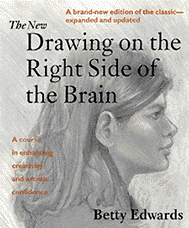
- Drawing on the Right Side of the Brain books, Betty Edwards [being added
to bibliography]
- Web Sites
- Illusion Works pages: http://psylux.psych.tu-dresden.de/i1/kaw/diverses%20Material/www.illusionworks.com/index.html
- Great explanations and interactive or at least animated examples http://psych.hanover.edu/Krantz/sen_tut.html
- Amazing applets. With questions! http://www.cogsci.uci.edu/personnel/hoffman/Applets/index.html
- http://www.visionweb.com/content/consumers/dev_consumerarticles.jsp?RID=36
Neurophysiology of eye for laypeople.
- Cog Sci/Perception links from Rice http://www.ruf.rice.edu/~pomeran/AlumniCollege2004Imagelist.htm
|

 Notes
Notes