|
1
|
|
|
2
|
- Mystery of vision and historical theories
- Ecological basis
- High-level perception concepts
- Figure-Ground
- Size constancy
- Depth and object solidity
- Lower-level: rules for image “construction”
- Visual Intelligence [Hoffman 1998] book has 35 rules that the
perceptual system uses to decode visual stimulus and create a useful
description of the world
- These underly the higher-level perceptual effects
- Perception research in the Visual Methodologies [Rose 2001] framework
|
|
3
|
- “…scientists in neurology, neurophysiology, the cognitive psychology of
vision, artificial vision, machine-assisted imaging, image analysis, and
the comparative study of animal vision generate more papers and
monograph per year than all of visual studies [i.e., visual theory, as
in last lecture] combined (by far…I would estimate the ratio is fifty to
one. Statistically, science is where vision is studied, not the
humanities.”
[Elkins 2003] p87. (Visual Studies: A Skeptical Introduction)
|
|
4
|
- Brown Brain Science Program (BSP)
- Cog sci, vision, neuro, psych, engineering, and more
- Work in neurological systems of vision; physiology of vision; pattern
theory; visual attention; depth cues, neural, behavioral and
computational models of faces and facial expression; computer vision;
perceptual learning; semantic-perceptual interaction; visual
navigation; and more.
- Human vision (examples, not comprehensive)
- Michael Tarr (Cog Sci)
- Bill Warren (Cog Sci)
- Billy Wooten (Psychology)
- Computer vision (examples, not comprehensive)
- Michael Black (CS)
- Gabriel Taubin (Engineering)
|
|
5
|
- Not at all obvious how vision works
- New type of retinal cell just discovered 3 years ago! Research at Brown
(BDH article)
- Plato, Aristotle (and others) eyes send out light to “see” objects
- Epicurus: “ ‘thin, hollow films’ of atoms—eidola—which retain the shape
of the object shedding them, continuously form around macro-objects,
travel swiftly through the air, and enter the eye, stimulating visual
sensations.” http://bulldog2.redlands.edu/fac/jeremy_anderson/research/Epicurus.pdf
- Kepler, 1604: Eye is a lens that focuses light on the retina
- But how do we make meaning out of light patterns?
|
|
6
|
- How do we get from photons to object recognition and categorization to conscious
understanding to meaning and emotion?
- Many stages of processing, with feed-forward but also feedback between
stages
|
|
7
|
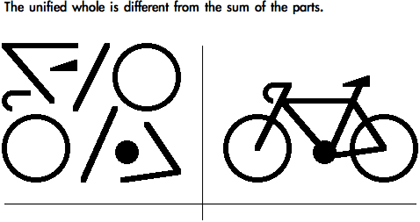
- Developed in Germany in early 1900s. Response to reductionist methods of
science
- “There are wholes, the behavior of which is not determined by that of
their individual elements, but where the part-processes are themselves
determined by the intrinsic nature of the whole. It is the hope of
Gestalt theory to determine the nature of such wholes.”
Max Wertheimer, 1924 http://gestalttheory.net/archive/wert1.html#fn1
- No one ingredient (or all of them randomly thrown together) make a
cake—need recipe
- Detail elision
- Hierarchy of abstraction
- Use in psychology, art,
other fields, as well as
vision science and
perception
|
|
8
|
|
|
9
|
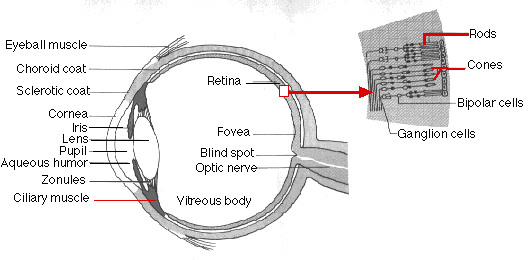
- “Mammalian lenses—look like onions. Hard to imagine more crappy optics.”
Michael Tarr
- Retina has 100+ million photoreceptors
- Photons changed to electro-chemical signals, go through additional
layers of cells + processing
- Only ~1million nerves leave the retina:
100/1 data compression
- “The computing power of your retina dwarfs the most advanced super
computers.” [Hoffman 1998] p66
|
|
10
|
- You somehow construct lines, curves, etc from patterns transmitted by
this neuron array
- Visual cortex has cells sensitive to:
- Line orientation: horizontal, vertical, and diagonal,
- Changes in brightness (edge detection)
- Length
- Motion
- Even direction of motion
- and more…
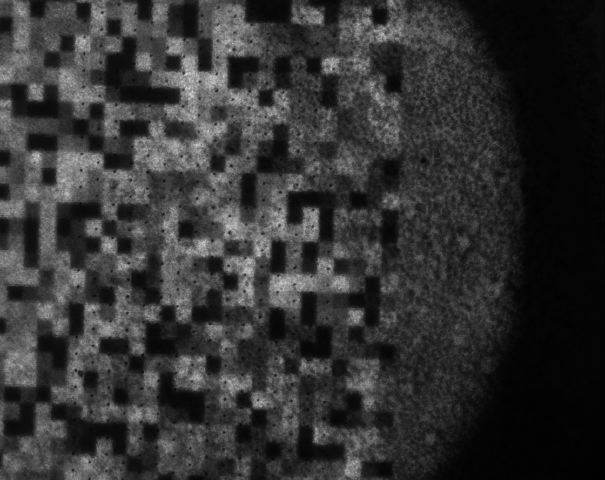
- Movie of retinal excitation (guinea pig) in response to moving bars http://www.snl-e.salk.edu/technology/
- Vision is “noisy”—massive statistical processing apparently takes place
|
|
11
|
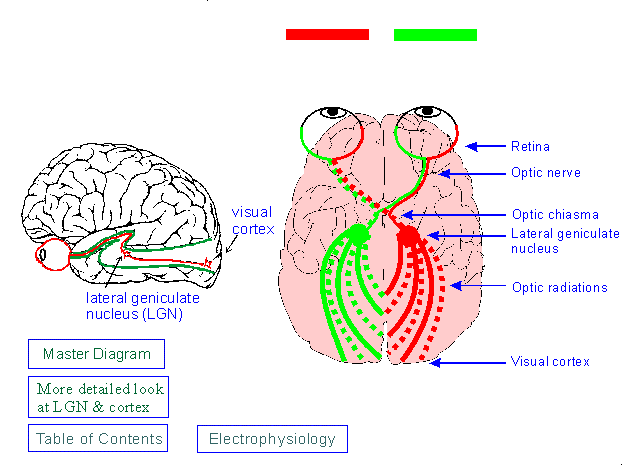
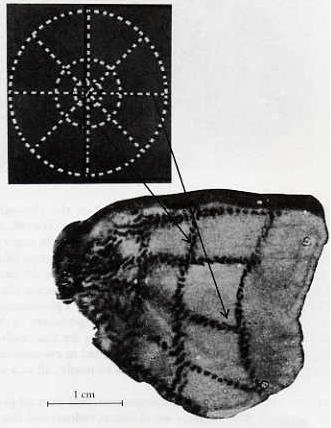
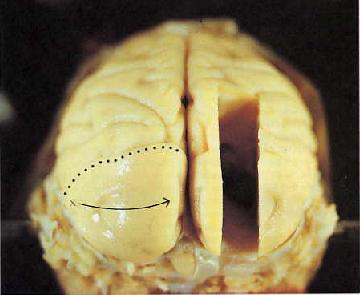
- Light stimulates retinal cells, impulses are transmitted, info arrives
in visual cortex creating a retinal map.
- Retina 2D and curved. Visual cortex convoluted. How does brain extract
meaningful information?
|
|
12
|
- Man who, after brain damage from carbon monoxide poisoning, could not
see/make sense of objects, despite no problem with visual acuity or
seeing motion, etc. [Hoffman 1998] p47
- Woman with dorsal simultanagnosia: can see parts but not assemble large
group of them into a scene or even simple parts into one object. Saw
pitcher, handle—said maybe suitcase? [Hoffman 1998] p79
- Woman who could see “fine” but could not see motion: liquid pouring
looked frozen, cars appeared suddenly (this state can be induced by
magnetically (temporarily) impairing certain area of visual cortex). [Hoffman
1998] p139
|
|
13
|
- Despite power of today’s computers, they can’t process visual
information nearly as well as we can
- Complexity of our visual system explains why it's so difficult to
get computer visual systems to "recognize"
anything even remotely as well answer do...
- Advances in computer vision and vision science influence each other
- E.g., exciting new work in artificial retinas
|
|
14
|
- Mystery of vision and historical theories
- Ecological basis
- High-level perception concepts
- Figure-Ground
- Size constancy
- Depth and object solidity
- Lower-level: rules for image “construction”
- Visual Intelligence [Hoffman 1998] book has 35 rules that the
perceptual system uses to decode visual stimulus and create a useful
description of the world
- These underly the higher-level perceptual effects
- Perception research in the Visual Methodologies [Rose 2001] framework
|
|
15
|
- Visual system solves problems with no unique solution but gets “right”
answer vast majority of time
|
|
16
|
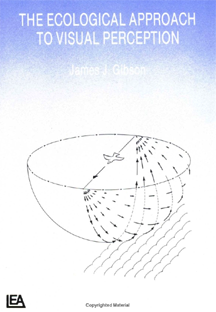
- James J. Gibson: vision evolved to help us stay alive in ancestral world—find
food, avoid falling off cliffs, being eaten by lions, etc.
- Lab experiments leaving out crucial context for vision
- May understand physiology without grasping “vision”
- World not simplified shapes or isolated dots—not surprising trouble
decoding them
- AI researcher David Marr asked “what is vision for?”: “…a process that
produces from images of the external world a description that is useful
to the viewer and not cluttered with irrelevant information.” [Pinker
1999] p213. [emphasis mine]
|
|
17
|
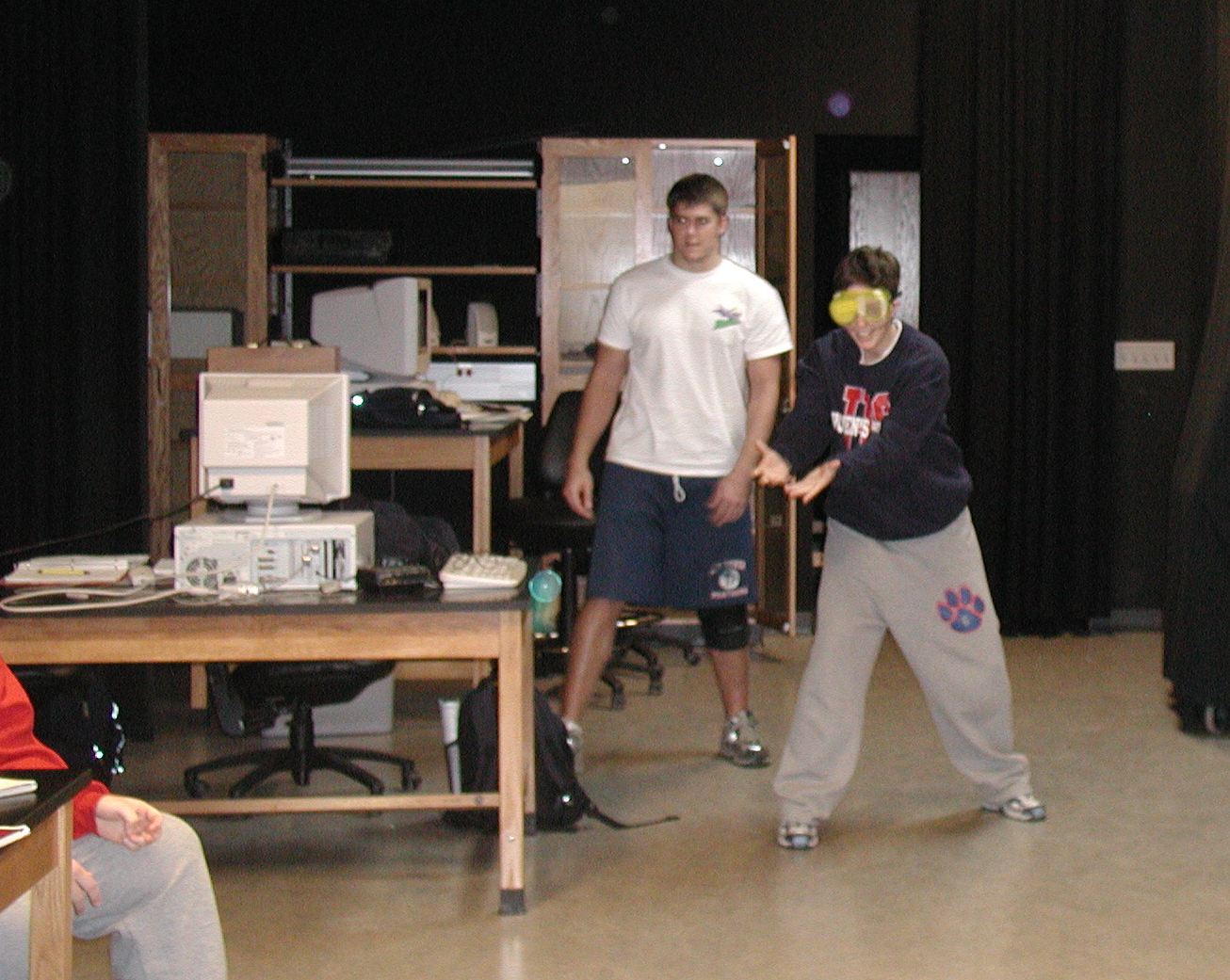
- Hermann von Helmholtz (1821-94)
- Wore prisms shifting world 11-degrees
- 1896 George Stratton-glasses that inverted retinal image
- Another experimenter (Kohler, 1962) did same for longer periods. Able to
ride bicycle, ski, and more. [Palmer 1999]
|
|
18
|
- “…objects don’t go out of their way to line up in confusing
arrangements.” [Pinker 1999] p212
- Cohesion makes smooth contours
- Motion, tension, gravity cause straight lines, right angles
- Near-parallel lines in image or from one point of view usually relate to
parallel lines real world
- Organisms that move evolve to be symmetric
- Objects look different under different lighting, but important to be
able to identify them nevertheless
|
|
19
|
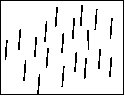
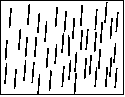
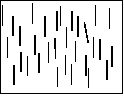
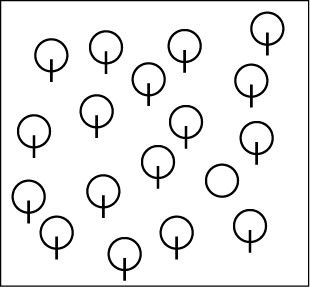
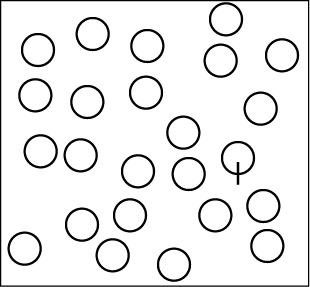
- We preconsciously (aka
preattentively) process whole “fields” of certain types of visual
information all at once, i.e., in parallel
- Don’t have to search sequentially through each visual object to see
“pop outs”
|
|
20
|
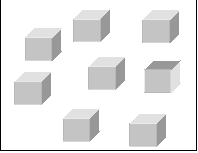
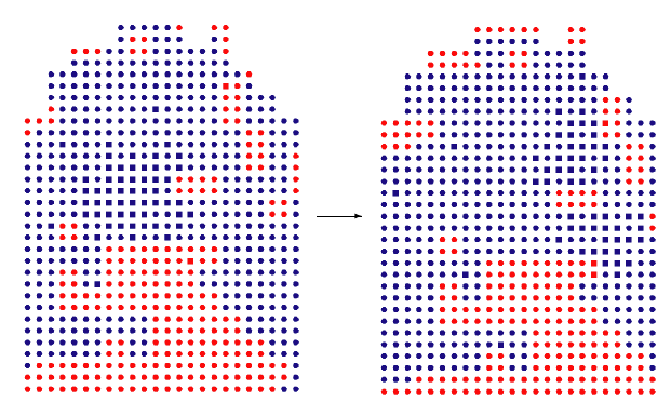
- This example uses assumption that light comes above (more on that later)
- Choosing visual representations carefully can help make scientific
visualization work better
|
|
21
|
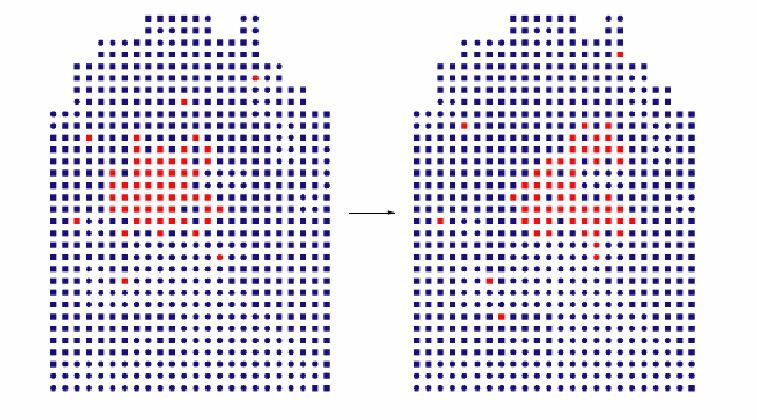
- Layers of retinal maps in visual cortex with sensitivities to features
such as lines, color, etc.
|
|
22
|
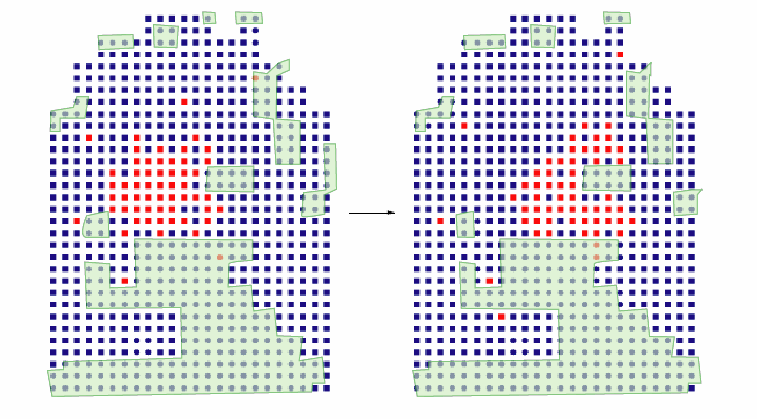
- Top:
- red = salmon
- circles (vs. squares) = hot temperature.
- Bottom:
- red = hot temp
- squares = salmon (circles = no salmon)
- “Results from our work provide a number of guidelines for the use of hue
and form in real-time visualization. Hue can be used to perform rapid
and accurate boundary and target detection. Form can be used to perform
boundary detection, but it cannot be used as readily to perform target
detection if a secondary data dimension is encoded with hue. If a user
wants to perform real-time multidimensional visualization, hue should be
used to encode the primary data dimension being investigated. Secondary
data dimensions can be encoded with form. This will not interfere with
boundary and target detection tasks performed using hue.”
|
|
23
|
- Why study vision system (or teach visual thinking) when we (mostly) all
see fine?
- …And we learned without any apparent effort
- Parents didn’t coach us or correct us (as they probably did with
language)
- No courses in “seeing” as there are in reading, writing and even
speaking
- Music, foreign languages after age of 12 usually require instruction
(and some of us never “get it”)
|
|
24
|
- Interesting for its own sake
- Exciting field
- Become more conscious of vision process
- Better interpret visual communications
- Create better visual communications, from art to graphic design to UI
design
- Help develop computer vision
- Better understand the human experience and thought process
|
|
25
|
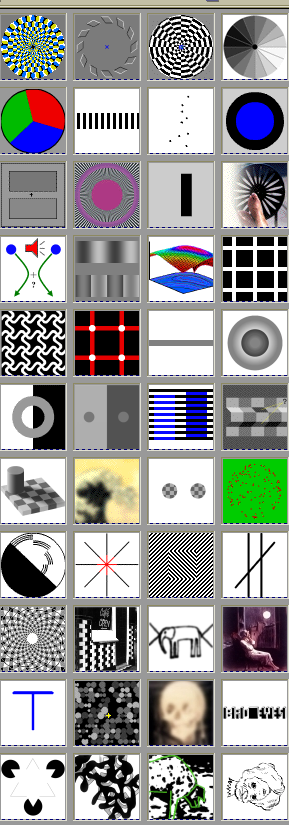
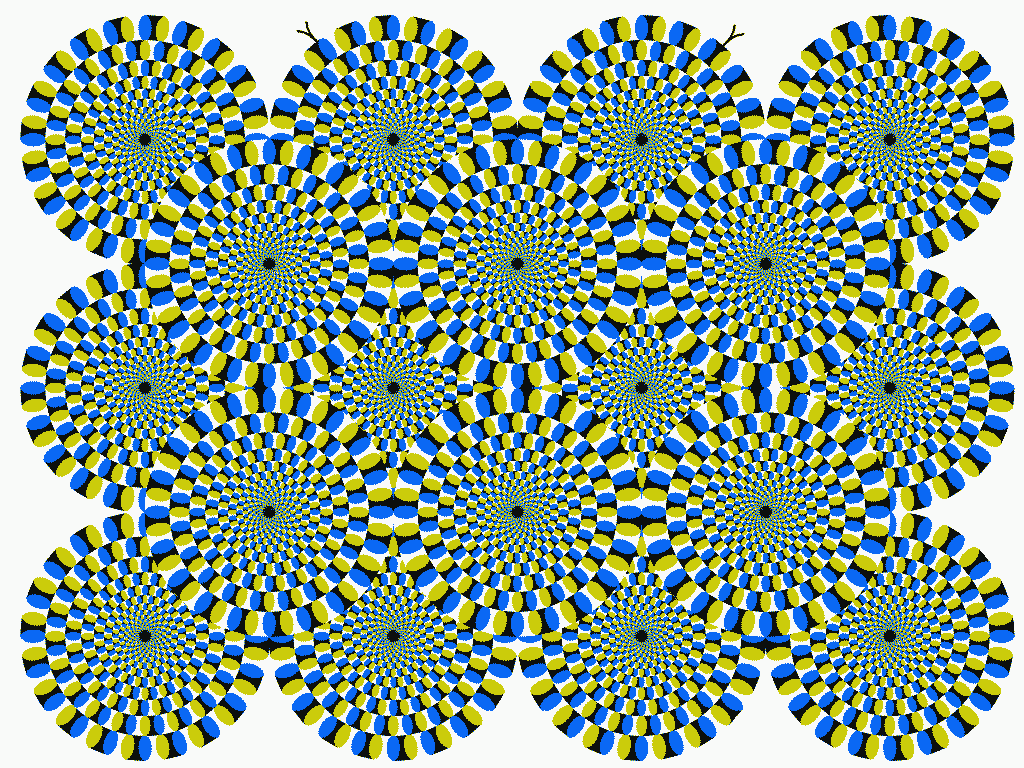
- Are exactly situations that don’t occur in nature
- Illusions used to reveal processing rules of eye-brain perceptual system
- May seem silly, but can reveal profound things
- Perceptual system makes a best-guess, but sometimes, especially in
carefully chosen situations, the system is wrong
|
|
26
|
|
|
27
|
- Link to explanations and worksheet
- Study your brain
- Experiment with parallel processing pop-out to help design useful
visualizations
- Tips (parameters to change)
- Orientation
- Line length
- Value (how dark/light)
- Curvature
- Shape
- Size
- Enclosure
- Juncture (whether lines fully connect)
- Parallelism
- Number
|
|
28
|
- Mystery of vision and historical theories
- Ecological basis
- High-level perception concepts
- Figure-ground
- Invariance
- Frame of reference
- Depth cues
- Lower-level: rules for image “construction”
- Visual Intelligence [Hoffman 1998] book has 35 rules that the
perceptual system uses to decode visual stimulus and create a useful
description of the world
- These underly the higher-level perceptual effects
- Perception research in the Methodologies framework
|
|
29
|
- Discovered in 1921 [Palmer 1999] p.280
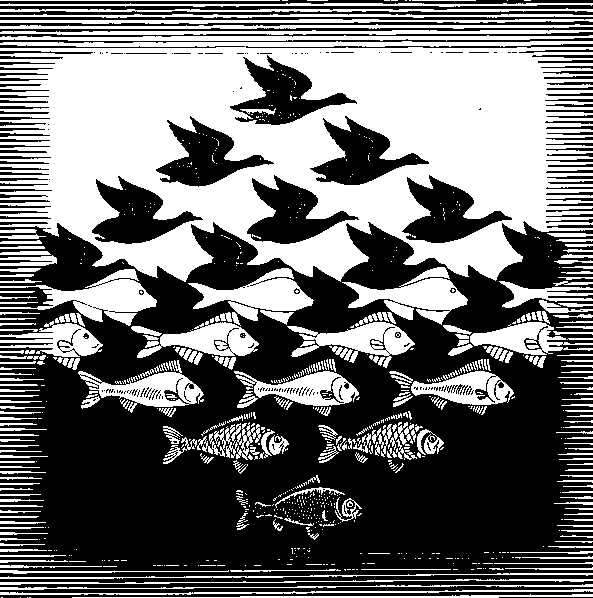
- We tend to divide a scene into figures and background
- This happens pre-consciously
- Usually easy to tell which is which (some ways of telling next)
- Usually only one side of a contour belongs to a “thing” or figure. When
not, brain is confused
- Familiar shapes appear to be figures faster than unfamiliar ones…
|
|
30
|
|
|
31
|
|
|
32
|
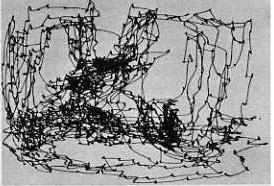
- Tracking eye motion. Difficult to jump to a void—we focus on the
“figure”.
|
|
33
|
- Surroundedness
- Size (smaller)
- Vertically or horizontally orientated objects more likely to be figures
- Contrast (including of color and texture)
- Symmetry
- Convexity (bulging out vs. caving in)
- Parallelism (contours parallel)
- Familiarity
- NB: motion often dominates in real life and moving images
|
|
34
|
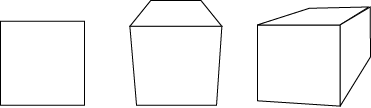
- “The mechanism that recovers stable and rigid objects from a myriad of
continuously changing retinal stimulations is called perceptual
constancy.” [Massironi 2001] The Psychology of Graphic Images: Seeing,
Drawing, Communicating. P27.
- Prof Fulvio to discuss 3D “optic flow” theory behind this, and other
research hypotheses (April 12)
|
|
35
|
- Link to explanation and worksheet
|
|
36
|
- Largest surrounding “frame” will be reference for all
- Evolutionary: we are sensitive to up-down orientation of our frame
(e.g., tilted room), but not so much to right-left
|
|
37
|
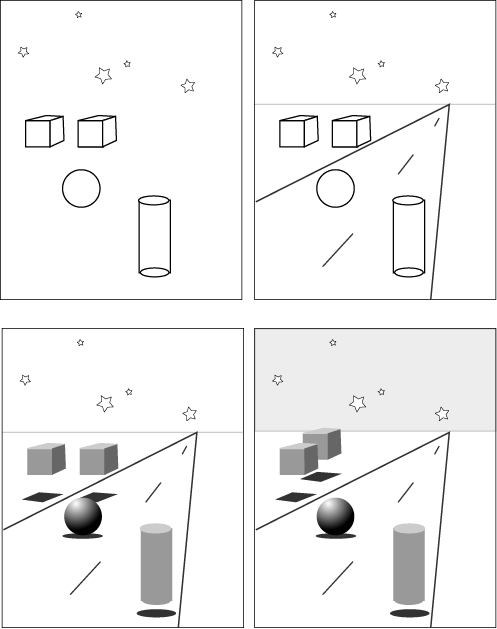
- We’ll be looking at depth cues again in more detail in the 3D Graphics
lecture
- Interposition
(overlapping)
- Relative height
- Aerial or
atmospheric attenuation
- Many shown live at http://psych.hanover.edu/Krantz/sen_tut.html
|
|
38
|
- Shadows help induce a ground plane
|
|
39
|
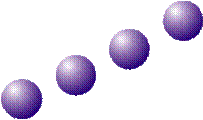
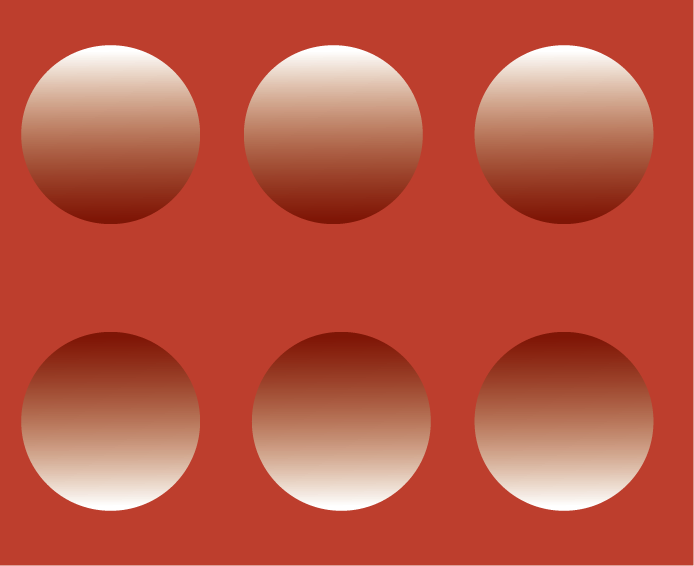
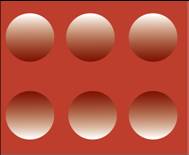
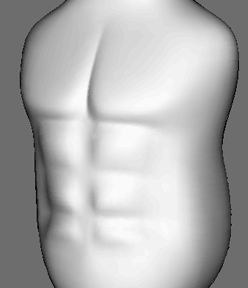
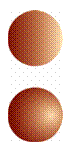
- Gradient on surface implies changing surface orientation (vs. changing
surface color)
- Use “light comes above rule” to further determine shape of surface
|
|
40
|
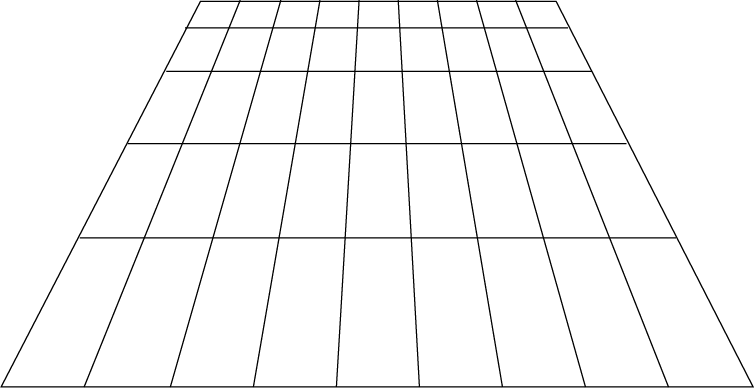
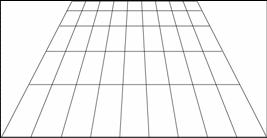
- Parallel lines converge
- Relative size/Size constancy
- Texture gradient
- Interactive animation
|
|
41
|
- Link to explanation and worksheet
- Tips:
- Overlap
- Relative height
- Atmosphere
- Shadows
- Shape from shading
- Projection (includes perspective)
|
|
42
|
|

 Notes
Notes