|
Semester Fall 2009 Schedule Tuesdays and Thursdays 2:30-3:50 Location SWIG Boardroom 241 Professor Sorin Istrail ![]() Special Topics: Guest Lecturers and Derek Aguiar (rap@cs.brown.edu) |
NewsJohn H. Conway, the John von Neumann Professor, Emeritus, at Princeton will be visiting Thursday Nov 19 and Friday Nov 20. He will give a general audience talk titled "The Symmetries of Things" as well as an informal discussion in class on Thursday. Click here for some background information. Also, Issam Zineh, Associate Director for Genomics U.S. Food and Drug Administration, will give a clinically focused non-technical talk. This lecture will be November 24 in class. He will also give a lecture in the evening entitled Shortening the Translational Lag on the Critical Path to Personalized Medicine at 5:30pm in CIT 241. Office Hours changed to Wednesdays, 5:30pm, in room 245. The elevators provide access to the second floor. Office hours may also be scheduled by appointment. Dr. Samuel Broder serves as the Chief Medical Officer at Celera and will deliver two lectures on 11/03/2009. In the mid 1980s, the team he led developed the foundational antiretroviral drugs now widely used in the therapy of AIDS and its related disorders in adults and children, including dideoxynucleosides such as RetrovirR (AZT) and VidexR(ddI), which are still in use today. Click here for a more in depth biography. Lecture 1 Abstract: The Human Genome: Sequencing and Assembling 3 Billion Letters of Code Was the Easy Part – our usual classroom and class time
Lecture 2 "The Development of Antiretroviral Therapy and Its Impact on the Global HIV-1/AIDS Pandemic: Lessons from "treating an untreatable" infectious agent."
Tuesday October 13, 2009 by Jonathan Yewdell, MD, PhD Dr. Yewdell is Chief of the Cellular Biology Section, Laboratory of Viral Diseases in the National Institute of Allergy and Infectious Diseases. He will deliver two lectures: Lecture 1 "Everything you wanted to know about viral immunology..no holds barred" – our usual classroom and class time Lecture 2 "How to Succeed in Science" CCMB Grantsmanship Lecture Series - our usual classroom at 5:30pm, food will be served so come early! For a fun to read biography of Dr. Yewdell click here Class will be canceled on Thursday 10/01/2009 due to Sorin attending the Sea Urchin Conference @ Woods Hole. A makeup will be announced. There are no prerequisites required for this course and it is open to advanced undergraduates, graduate, and medical students. If you are an undergraduates who wishes to enroll, please discuss this with the instructor. This course is devoted to computational problems and methods in the emerging field of Medical Bioinformatics where genomics, computational biology and bioinformatics impact medical research. We will focus on three areas: Disease AssociationsThe goal of genome-wide association studies (GWAS) is to identify inherited genetic variation and its critical role in human disease. Huge datasets containing billions of SNPs, such as the Multiple Sclerosis Consortium GWAS data, will be a subject of our investigations. We will study common genetic variation of weak effects, such as in type2 diabetes studies, and rare variants of large effect, as in schizophrenia association studies.Guest Lecturer: Samuel Broder, M.D., (Celera, Chief Medical Officer) former director of the National Cancer Institute and whose lab made key contributions to the development of AIDS treatments such as AZT, ddl, and ddc, will deliver lectures on the genomics based diagnosis of disease, as well as, game theory and Pharmaeconomic behavior. Relevant papers include Optimal Haplotype Block-Free Selection of Tagging SNPs for Genome-Wide Association Studies.
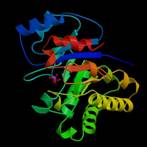
Protein FoldingThe computational "protein folding problem," can be stated as follows: can we computationally predict the 3-D native structure of a protein from its 1-D amino acid sequence? We will explore a few basic computational problems associated with the area of Computational Protein Folding. We will also discuss some computational problems related to Drug Design that involve chemical graph theory.Guest Lecturer: Professor John Conway (Princeton) – renown mathematician, recipient of the Berwick, Pólya, and Nemmers Prizes, and fellow of the Royal Society – will discuss mathematical challenges in sphere and side-chain packing problems. Guest Lecturer: Professor Issam Zineh Pharm.D., MPH (UF) – Associate Director for Genomics in the Office of Clinical Pharmacology, CDER, FDA – will discuss challenges in computational genomics at the FDA. Relevant papers include Combinatorial Algorithms for Protein Folding in Lattice ImmunogenomicsKiller T-cells, the “special forces” of the human immune system, travel throughout the body and eliminate cells that “display” short pieces of pathogen proteins, called epitopes that are difficult to infer. We will search for epitopes in the immunopeptidomes of H. sapiens, M. musculus, HIV, vaccinia, etc.Guest Lecturer: Jonathan Yewdell M.D., Ph.D. (NIH) – leading immunologist and head of NIAID Cell Biology and Viral Immunology – will discuss computational challenges in the arms race between Humans and their pathogens. Relevant papers include Comparative immunopeptidomics of humans and their Pathogens For each area we will present a few challenging problems as well as computational methods for their solution. They involve combinatorial algorithms and statistical models, sequence motif analysis and (chemical) graph theory. This course is open to graduate students and advanced undergraduates with Computational or Life Science backgrounds. Prior background in Biology is not required. * Formerly known as Algorithmic Foundations of Computational Biology II |
|